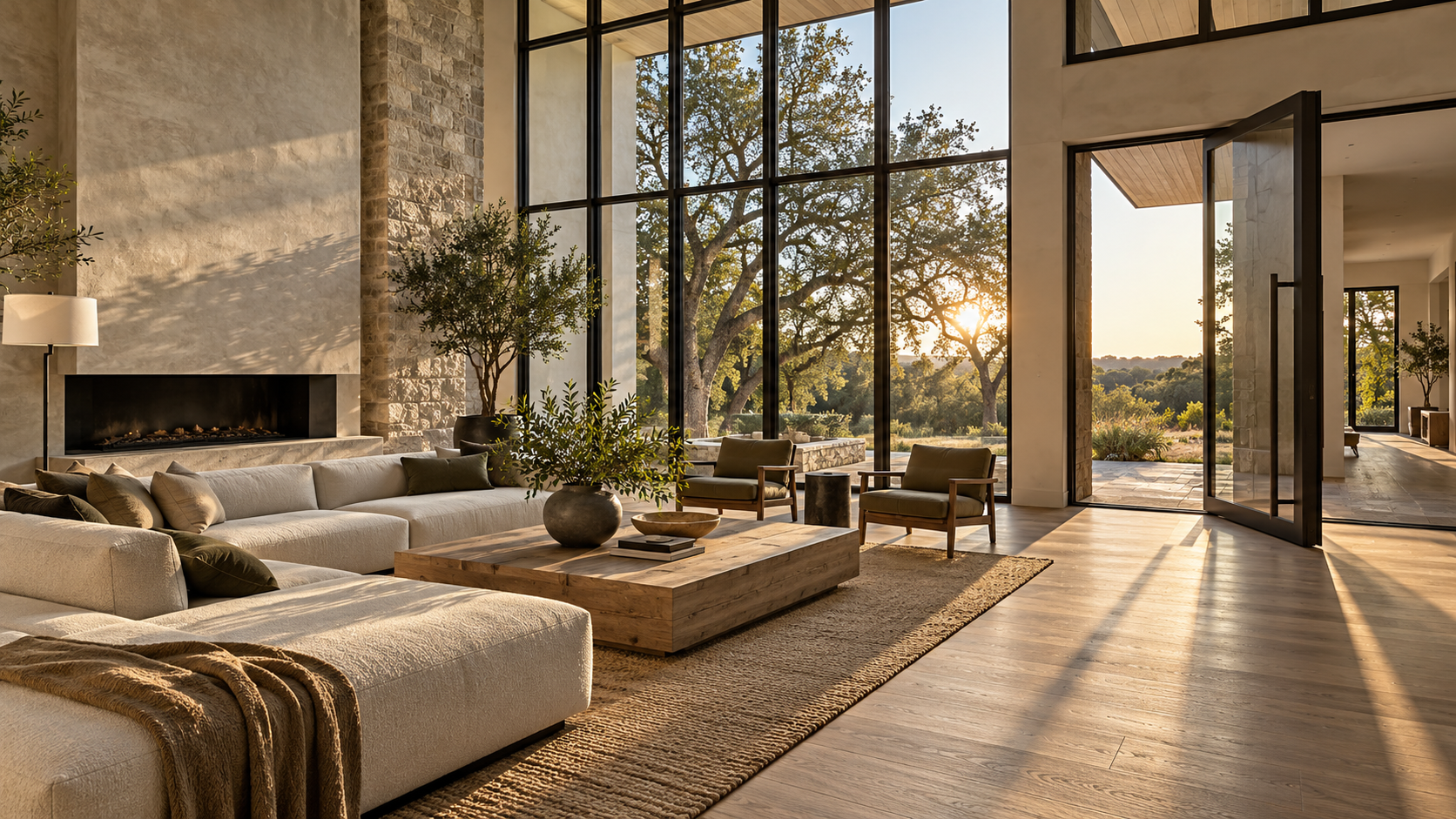
Splurge on what is hard to change later, and save on what you can swap in a weekend. Windows, the building envelope, structure, mechanical systems, and the surfaces your hands touch every day deserve the money; light fixtures, cabinet pulls, and secondary-room finishes can wait for an upgrade.
Every custom home budget runs into the same wall eventually. The wish list is longer than the number. The question is not whether to compromise, but where, and the answer is almost never an even trim across every line item.
Key Takeaways
- Sort every line item by one test: how hard is it to change after move-in?
- Spend on the envelope, windows, structure, and systems — they are buried behind finished walls.
- Spend where light lands and hands touch: the island top, entry floor, primary bath, and door hardware on the main doors.
- Save on swappable items: decorative lighting, secondary-bedroom finishes, most hardware, and some appliances.
- Rough in now for what you might want later — conduit, blocking, and plumbing stubs cost little during framing and a fortune after.
The One Test We Use: How Hard Is It to Change Later?
When a client asks us where to cut, we sort the budget into three piles. Permanent items are built into the structure and cannot be touched without demolition. Semi-permanent items can be replaced, but it is messy and expensive. Swappable items can be changed on a Saturday with a screwdriver.
Money belongs in the first pile first. A mid-grade chandelier can become a great one in five years. A poorly insulated wall stays poorly insulated for the life of the house.
Where to Splurge
Windows and exterior doors
Windows are the single most common regret we hear about. Cheap frames feel flimsy on day one, leak air by year ten, and replacing them means cutting into finished walls and exterior cladding. Thermally broken frames and good glass pay back in comfort, sound control, and energy every single day.

The envelope and structure
Insulation, air sealing, roof underlayment, flashing, and framing are invisible once drywall goes up, which is exactly why they get cut. Do not let them. This is also the moment to add structure for what comes later: a beam sized for a future opening, blocking for a heavy mirror, or a slab that can take a stone floor.
Mechanical systems
HVAC zoning, dehumidification, fresh-air ventilation, and plumbing layout are hard to redo once ceilings close. Radiant floor heat in a bathroom, a recirculating hot water loop, or a properly sized, zoned system are small line items during construction and major projects afterward.
The surfaces you touch every day
Premium belongs where light hits and hands land. The kitchen island top, the primary bath vanity, the entry floor, and the handle on the front door get touched thousands of times a year. That is where a beautiful stone or a solid-brass lever earns its price.

Where to Save
Decorative lighting and hardware
Pendants, sconces, and cabinet pulls are the easiest upgrades in the house. Spend on the lighting plan — the recessed layout, the dimming, the switch locations — and choose modest fixtures that can be swapped later. The wiring is what matters; the fixture is jewelry.
Secondary rooms
Guest rooms, kids' bedrooms, and secondary baths can use solid, simple finishes. Good paint, a clean tile, and well-proportioned trim read as quality without premium pricing. Character can come later through furniture, art, and lighting.
Split the finish, not the quality
Use the expensive material where it is seen and a quieter one where it is not. A statement stone on the island with a simpler surface on the perimeter. Hardwood in the main rooms and a durable tile in the utility zones. Custom millwork in the living room and well-built stock cabinets in the laundry.
Rough In Now, Finish Later
The smartest money in a custom home is often the cheapest. Conduit to the roof for future solar, a 240-volt circuit in the garage for a second car charger, plumbing stubs for a future outdoor kitchen, and blocking behind walls for shelving or grab bars cost very little during framing. Adding any of them after move-in means opening walls.

What Changes for a Houston Custom Home
Our climate moves more line items into the splurge pile. Heat, humidity, and storms punish a weak envelope. In the Houston area we push clients toward better roof underlayment, careful window flashing, dedicated dehumidification, and generous roof overhangs before we talk about finishes. Those choices protect every dollar spent inside.
If you are weighing these trade-offs on your own project, start a conversation with the studio. Sorting the budget early, before drawings are finished, is where the biggest savings live.
Frequently Asked Questions
What is the most common thing people regret saving on?
Windows, by a wide margin. They affect comfort, noise, and energy every day, and replacing them later means cutting into finished walls and cladding.
Is it better to finish every room or leave some for later?
Leaving a bonus room or guest suite lightly finished is a smart way to protect the budget, as long as the wiring, plumbing, and HVAC are roughed in now.
Should I save on appliances?
Often, yes. Appliances are replaceable. Just size the cabinet openings, gas lines, and electrical for the range you want someday, so the upgrade is a swap, not a remodel.
When should budget decisions be made?
During design, not construction. Moving money between line items on paper is free; changing your mind once walls are framed is not.