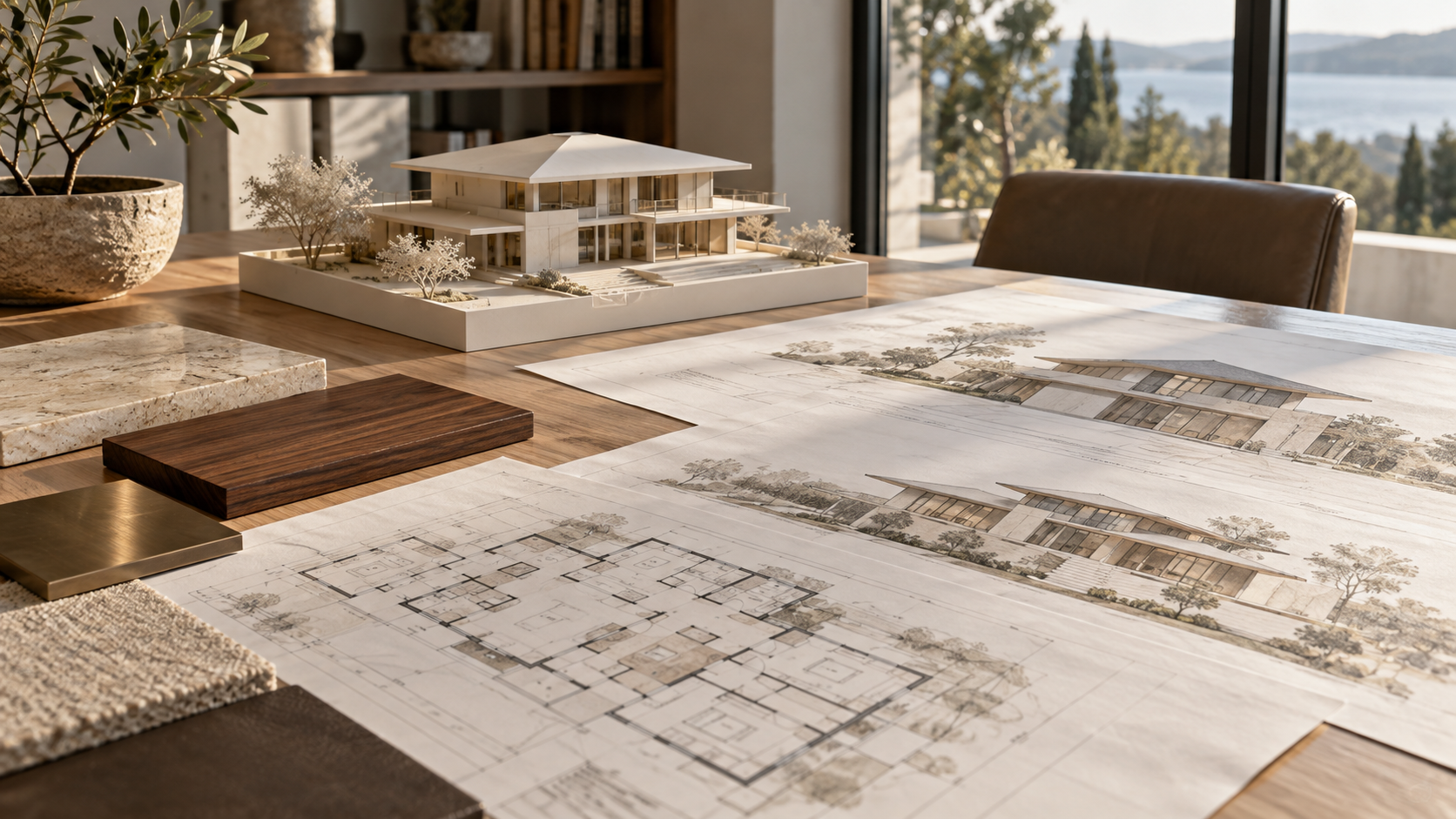
If the house itself is the point, hire an independent designer or architect first and bring a builder in alongside them. If a single contract and a faster start matter more than shaping every room, a design-build firm can work well. The real question is who is looking out for the design when the budget gets tight.
We get asked this in almost every first conversation. Both paths build good houses. They just put the designer in a different seat, and that seat changes how decisions get made for the next two years.
Key Takeaways
- Independent design: the designer works only for you, and the builder is chosen or negotiated separately.
- Design-build: one firm designs and builds under one contract, which is simpler but blends the two roles.
- The biggest difference is who advocates for the design when cost and design pull in different directions.
- You can bring a builder in early on the independent path to get pricing feedback during design.
- In Texas, a single-family home does not legally require an architect, so the choice is about fit, not code.
How the Two Paths Actually Work
The independent designer or architect path
You hire the design team directly. They study the lot, write the program with you, and develop the house through schematic design, design development, and construction documents. Builders then price a finished or near-finished set, or one builder is brought on early to price as the drawings develop.
Because the designer is not selling construction, their job is to protect what you asked for. When a bid comes in high, they help you decide what to change instead of quietly swapping materials to hit a number.

The design-build path
One company handles both design and construction. You sign one contract, talk to one team, and the builder's cost knowledge is in the room from day one. Many design-build firms also offer a set menu of plans or finishes, which can shorten the schedule.
The trade-off is that the designer and the builder share a paycheck. That is not a problem with an honest firm, but it does mean nobody at the table is paid only to defend the design.
Cost, Control, and Accountability
Cost
Design-build often looks cheaper up front because the design fee is folded into the construction contract. On the independent path, the fee sits on its own line. Over the whole project the totals tend to land closer than people expect. What changes is where the money is visible and who decides how it moves.
Control
With an independent designer, you own the decisions and usually the right to use the drawings, so you can take them to more than one builder. With design-build, drawings are typically tied to that firm's contract, and switching builders midstream is harder.
Accountability
Design-build gives you one point of responsibility, which is genuinely useful when something goes wrong. The independent path has two parties, but the designer can review the builder's work against the drawings on your behalf. Think of it like a home inspector you hired versus one the seller picked.

Which One Fits Your Project?
We usually suggest the independent path when the lot is unusual, the program is personal, or the client cares deeply about how the house looks and feels. Design-build fits well when the client wants a proven layout, a fixed budget early, and fewer decisions.
- Choose independent design if you want options on builders, a house shaped to a specific lot, or someone whose only job is the design.
- Choose design-build if you value one contract, a quicker start, and are comfortable with the firm's typical style and finishes.
- Blend them by hiring the designer first, then bringing a builder on during design development for pricing input.
A Note on Texas Custom Homes
Texas does not require an architect to design a single-family house, so many homes around Houston, Fulshear, and the Hill Country are drawn by residential designers or a builder's in-house team. That freedom makes the choice of who designs your home more important, not less. Ask to see finished houses, not only renderings, and ask who coordinates the structural engineer and the drainage and energy requirements your city or county will review.

If you are weighing both paths, we are happy to walk through your lot and program and tell you honestly which one fits. You can start a conversation with the studio whenever you are ready.
Frequently Asked Questions
Is design-build cheaper than hiring an architect?
Sometimes up front, because the design fee is bundled into the build contract. Across the whole project the gap is usually smaller than it looks. The bigger difference is who decides where the money goes when bids come in.
Can I hire a designer and still get early pricing from a builder?
Yes. Many clients hire the designer first, then bring a builder on during design development. The builder prices as the drawings grow, so there are fewer surprises at the end.
Do I need an architect to build a custom home in Texas?
No. Texas law exempts single-family homes from requiring a licensed architect. You still typically need a structural engineer for the foundation and framing, and your plans must pass local code and permit review.
Who owns the drawings?
It depends on the contract. With an independent designer you can usually take the drawings to several builders. With design-build, the drawings are typically tied to that firm, so read that clause before you sign.