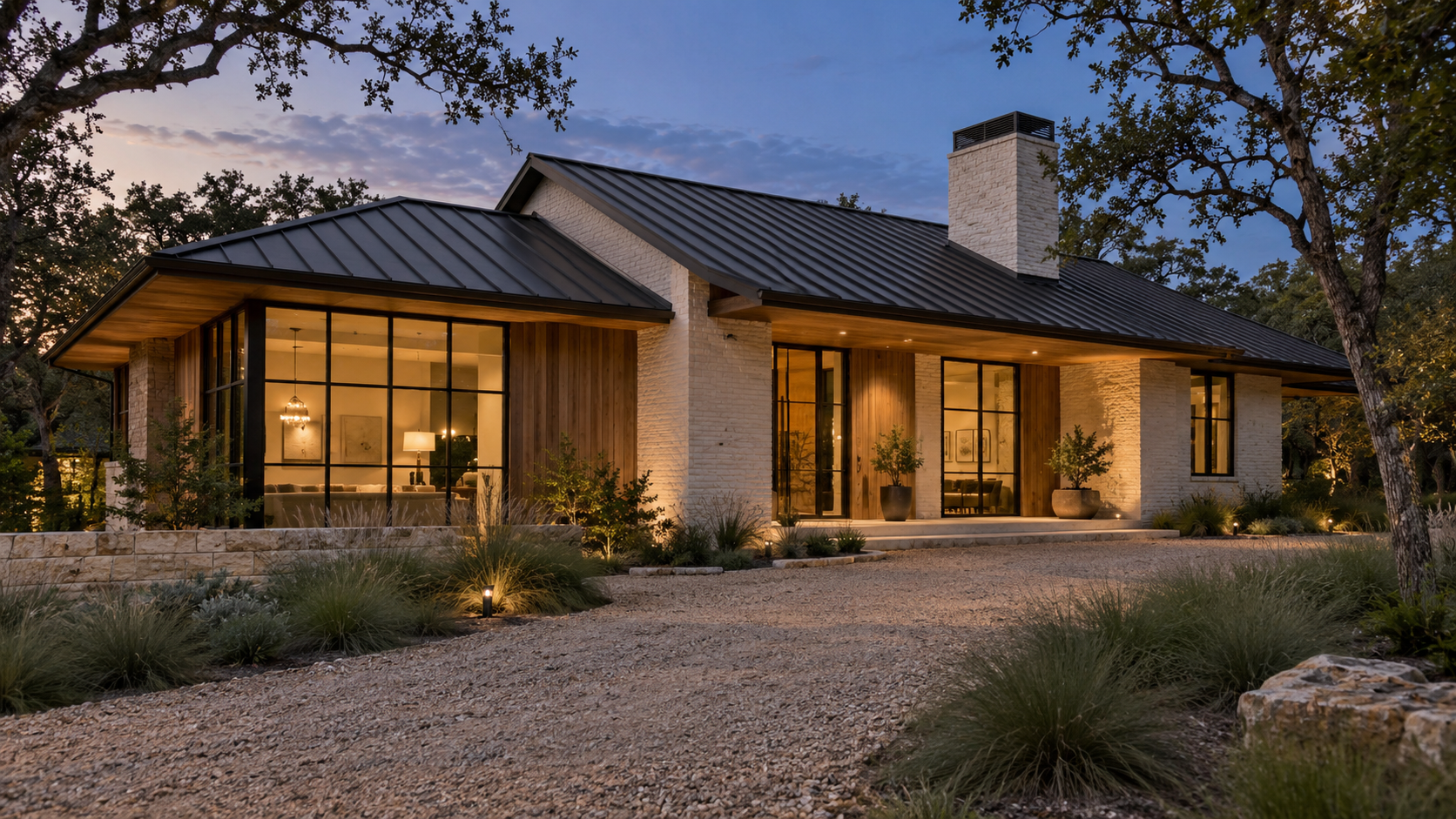
For most modern and transitional custom homes, a standing seam metal roof is the strongest all-round choice: light, long-lived and highly hail resistant. Clay tile and natural slate earn their place on heavier, more traditional designs, but only when the framing, pitch and budget are planned for them from the start.
Roofing is usually picked late, from a sample board, after the structure is drawn. We treat it as a design decision instead, because the material sets the minimum pitch, the weight the rafters carry, the eave detail, and how the house reads from the street for the next fifty years.
Key Takeaways
- Standing seam metal typically lasts 40 to 70 years, weighs a fraction of tile, and often carries a Class 4 impact rating.
- Clay tile lasts 50 to 100 years and handles heat well, but can weigh two to three times as much as asphalt shingles, so the structure must be designed for it.
- Natural slate can last 75 to 150 years, but it is the heaviest and most expensive option and can crack under large hail or foot traffic.
- Every material has a minimum roof pitch. Choose the roof form and the material together, not one after the other.
- In Texas, insurers must offer a premium discount for qualifying impact-resistant roofs, so the rating is worth documenting.
Why the Roof Material Is a Design Decision
A roof is often the largest surface of a house you can see. On a low, wide plan with long eaves it can be more visible than the walls, and its texture, color and shadow lines do as much work as the facade below it.
The material also constrains geometry. Some systems need a steeper slope to shed water, some need heavier rafters, and some limit how tightly a valley or curve can be formed. Choose the material and the form together and both come out right; choose them separately and one of them usually has to give.
Standing Seam Metal: Clean Lines, Low Weight
Standing seam runs continuous panels from ridge to eave, joined by raised seams that hide the fasteners. The result is a crisp, linear roof that suits contemporary, transitional and modern farmhouse designs. The panels are light, and a well-installed system commonly lasts 40 to 70 years with little maintenance.

What we specify on a metal roof
- Panel gauge and seam height: a heavier gauge and taller seam resist denting and waviness better.
- Finish: a light, reflective coating keeps the roof cooler; dark bronze and charcoal read richer but run hotter.
- Floating clips that let long panels expand and contract with heat without buckling.
- A high-temperature underlayment, because metal surfaces get very hot in summer.
Clay Tile: Warmth and Heat Performance
Clay tile has a long record in hot climates. Barrel and flat profiles leave an air space under each piece that helps the roof shed heat, and fired clay holds its color for decades. Clay commonly lasts 50 to 100 years. Concrete tile costs less but is heavier and its color fades sooner.
The catch is weight. Tile can weigh two to three times as much as asphalt shingles, so rafters, trusses and sometimes foundations are sized for it. On a new custom home that is simply part of the structural design. On a renovation it can rule tile out.

Natural Slate: The Longest Life, the Highest Demands
Natural slate is the longest-lasting roof available, with a proven life of 75 to 150 years when installed well. Its layered, hand-set texture suits traditional, Tudor and French-inspired architecture, and nothing else ages quite like it.
It is also the heaviest and most expensive option. Slate needs reinforced framing and a specialist installer, and individual pieces can crack under large hail or careless foot traffic. Repairs get harder over time as matching stone becomes scarce. Metal and composite slate alternatives trade some lifespan for far lower weight and better impact resistance.

What Changes in Houston
Houston roofs face three things at once: hail, hurricane-force wind and long months of heat. Hail favors roofing with a UL 2218 Class 4 impact rating, a test that drops a two-inch steel ball on the same spot twice. Many standing seam systems reach it; natural slate and many tiles do not.
Texas law requires home insurers to offer a premium discount for roofs with a qualifying impact-resistance rating, though the amount varies by carrier and it is never applied automatically. We name the rated product in the drawings so owners can document it. Wind uplift ratings, fastening patterns and a reflective finish that keeps attic temperatures down matter just as much here.
How We Help Owners Choose
- Start with the architecture: the roof should read as part of the house, not a product added to it.
- Match the pitch: confirm the material works at the slope the design calls for.
- Size the structure: design the framing for the finished roof weight from day one.
- Check the climate ratings: impact, wind uplift and solar reflectance.
- Price the whole life: a roof that lasts twice as long can cost less per year.
If you are weighing roofing for a new home, start a conversation with the studio and we will show how each option changes the design.
Frequently Asked Questions
Is a metal roof noisy in the rain?
Not on a properly built house. Over solid decking, underlayment and an insulated roof assembly, rain on standing seam sounds much like any other roof. The loud metal roofs people remember were usually bare panels over open framing.
Which roof lasts the longest?
Natural slate, at 75 to 150 years when well installed. Clay tile follows at 50 to 100, and standing seam metal at 40 to 70. Underlayment and flashings often wear out before the surface does, so we detail them to last as long as the roof.
Can I switch from shingles to tile later?
Sometimes, but rarely easily. Tile and slate need framing sized for their weight, so a house built for shingles may need structural reinforcement first. It costs far less to decide during design.
Does roof color matter in a hot climate?
Yes. Lighter, reflective finishes keep the roof surface and attic cooler, which lowers the cooling load. Darker roofs can still work with good attic ventilation or insulation at the roof deck, but plan for it.