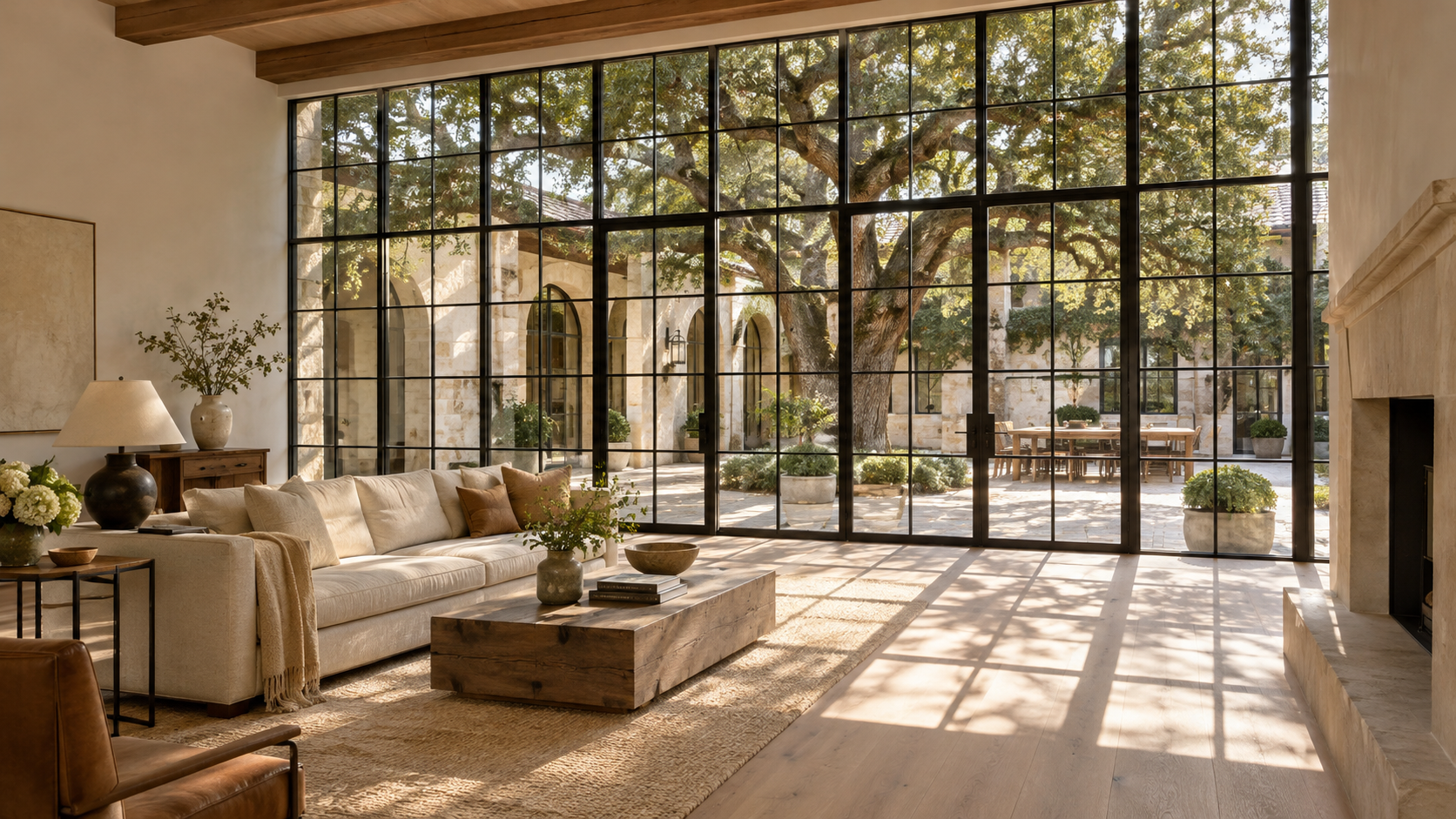
Steel windows and doors are worth it in a custom home when slender sightlines and longevity matter more to you than first cost. Modern thermally broken steel fixes the old problem of cold, sweating frames, but it still costs far more than aluminum, so the smart move is to use it where the glass is the main event and pick something simpler elsewhere.
As experts in home design, we get asked about steel more than almost any other window material. Clients see a black grid of slim mullions in a magazine and want it everywhere. Below is how we think through where steel earns its place, what it really takes to specify, and when an aluminum look-alike is the better call.
Key Takeaways
- Steel's strength lets frames and muntins be much thinner than aluminum, wood-clad, or fiberglass at the same glass size.
- Always specify thermally broken steel for conditioned rooms; non-broken steel conducts heat and can condense in humid climates.
- Expect steel to cost a clear premium over aluminum; most homes use it in a few signature openings, not every window.
- Steel-look aluminum gets close to the look for less money, but its profiles are visibly heavier up close.
- Plan steel early: lead times are long and the openings, waterproofing, and structure must be drawn around the product.
Why Steel Looks Different From Every Other Frame
Steel is several times stiffer than aluminum, so a steel frame can hold the same pane with a fraction of the metal. That is where the famous look comes from: face widths around an inch or less, true divided lites with crisp muntins, and tall doors that do not need chunky stiles to stay straight.
The result reads lighter and more architectural. A wall of steel glazing between a great room and a courtyard almost disappears, while the thin grid still gives the opening scale and rhythm. Wood-clad and fiberglass units simply cannot get that slim at large sizes.

Thermally Broken Steel: The Part You Cannot Skip
Older steel windows were solid metal from inside to outside. In a humid climate like ours, that means a cold interior frame on a hot summer day once the air conditioning is running, and condensation where warm, moist air meets it. In winter the problem flips. Either way, comfort and finishes suffer.
A thermal break is an insulating strip that separates the outer steel from the inner steel so heat cannot travel straight through. Paired with insulated, low-e glass, it brings steel's performance into a range that works for conditioned rooms and modern energy codes.
What to ask the manufacturer
- Is the system tested as a whole unit for U-factor, air, and water, and what are the numbers?
- What glass package is standard, and can we choose the low-e coating for our orientation?
- What finish is used, and what is the warranty against corrosion near salt air or pools?
- What are the current lead times for doors versus fixed windows?
Steel vs. Steel-Look Aluminum
Several aluminum makers now offer narrow-profile, black-finished systems marketed as a steel look. They cost noticeably less and arrive faster, and from across the yard they read well. Up close, the profiles are deeper and wider, the muntins are often applied rather than true, and the corners are softer.
Our design experts usually suggest a split. Put real steel in the openings people touch and study: the front entry, the great room wall, a primary suite door to the garden. Use a quality steel-look aluminum or a slim aluminum system for secondary bedrooms, baths, and the back of the house. Matching the finish color and keeping sightlines aligned makes the switch hard to spot.

Designing Around Steel in a Houston-Area Home
Steel works best when the house is drawn for it from the start. The rough openings, structural headers, and flashing details depend on the exact system, so we choose the product during design development, not after framing. Large steel doors are heavy and may need a steel or engineered header above them.
Climate matters too. Along the Gulf Coast we look for a factory finish rated for coastal exposure, keep steel out from under pool splash zones where possible, and give every opening a deep overhang or porch. Shade cuts heat gain through all that glass and keeps rain off the sill, which extends the life of any frame.
Where steel earns its cost
- Interior steel partitions: a glass wall into a study or library adds light without losing separation, and needs no thermal break.
- Courtyard and great-room walls where the view is the point.
- Front entries and pivot-style doors that set the tone of the house.

What Steel Costs, Roughly
Custom steel is priced project by project, and quotes swing with size, operable versus fixed units, glass, and finish. As a rule of thumb, plan on steel costing a clear multiple of a good aluminum system, with large operable doors at the top of the range. The longer lifespan helps the math, but it rarely closes the gap on day one.
The way to keep it in check is focus. Two or three steel moments in a house often deliver most of the impact for a fraction of what an all-steel package would cost. Our expert design team prices both options early so the choice is made with real numbers.
FAQ
Do steel windows rust?
Modern steel windows are galvanized or primed and finished at the factory, so with normal care they hold up for decades. Scratches should be touched up promptly, and coastal or poolside openings need a finish rated for that exposure.
Are steel windows energy efficient?
Thermally broken steel with insulated low-e glass performs well enough for conditioned rooms. Non-broken steel does not, so save it for interior partitions.
Is steel-look aluminum a good substitute?
For secondary rooms, yes. It is like a well-tailored suit off the rack next to a bespoke one: fine from a distance, different up close. Keep true steel for the openings people see and touch most.
When should we decide on steel?
During design, before the openings are finalized. Lead times are long and the structure and waterproofing depend on the system. If you are weighing it, start a conversation with the studio and we will show you where steel pays off in your plan.