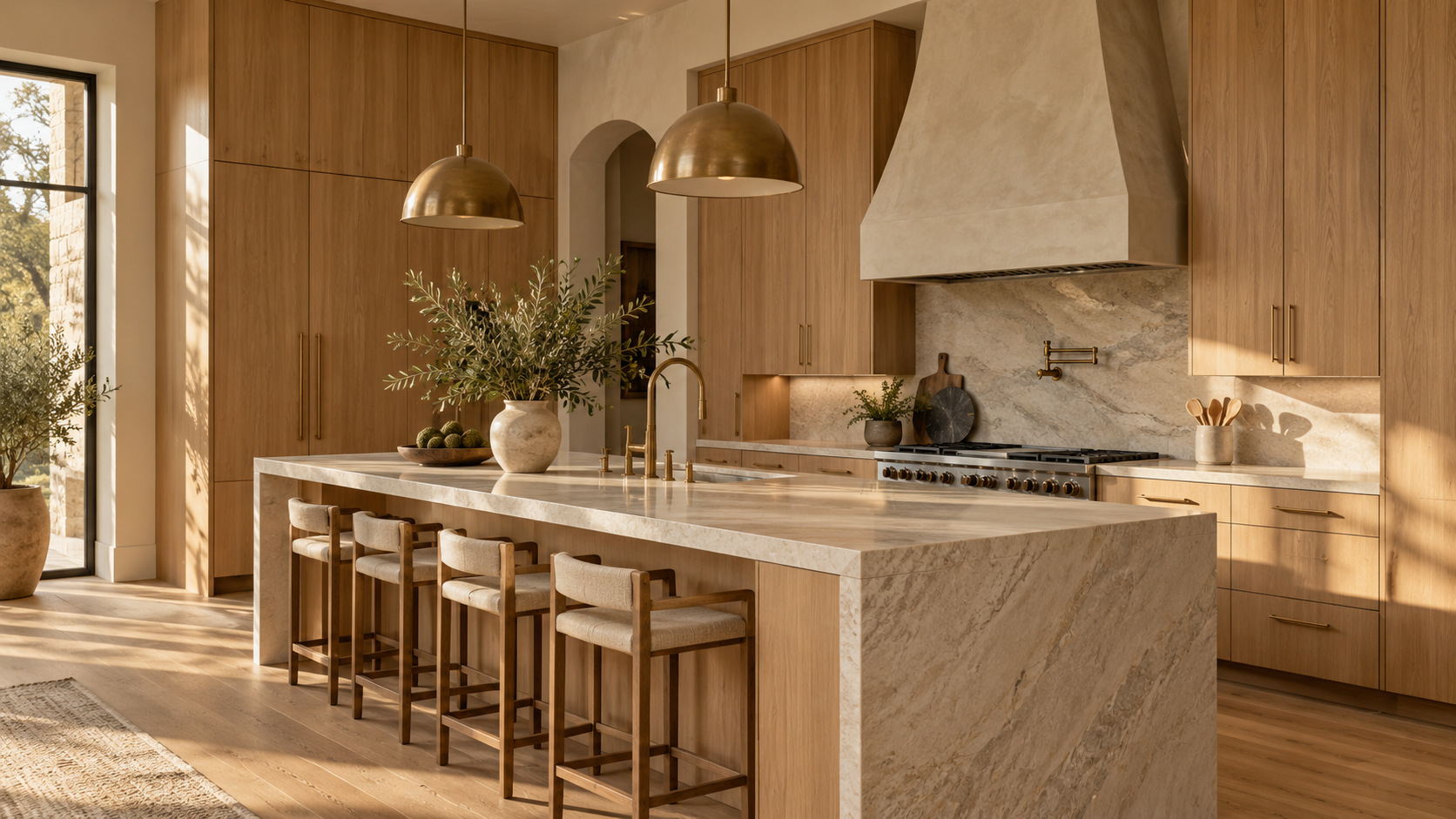
Stained wood cabinets are warmer, hide daily wear better, and age into their color, while painted cabinets give a crisp, controllable color but show chips at every edge that gets touched. For most custom kitchens we design, the right answer is not one or the other but a deliberate mix of the two.
After a decade of all-white and all-gray kitchens, homeowners are asking for wood again. Design-trend reports this fall describe the same shift: warmer tones, natural materials, and finishes that look better with age instead of worse. Cabinetry is the biggest single surface in a kitchen, so it is where that decision matters most.
Key Takeaways
- Stained wood hides scuffs and fingerprints; paint shows them, especially on lower doors and pulls.
- Paint on wood moves with humidity and cracks at panel joints; stain does not.
- White oak and walnut are the two species that carry most warm, modern kitchens.
- A two-finish kitchen (wood base, painted or plaster-toned uppers) is often the best of both.
- Decide finish and species during design so the hardware, stone, and lighting are chosen around it.
Why Wood Cabinetry Is Coming Back
Wood brings depth that a flat paint color cannot. Grain catches light differently through the day, so a wall of white oak doors reads soft in the morning and golden in the evening. Painted doors look the same at every hour, which is exactly what made them feel clean, and exactly why so many people now find them a little cold.
There is also a practical reason. A kitchen is used hard. Stained wood is forgiving: a small dent or a scuff blends into the grain, and the finish can be spot-repaired without anyone noticing. On a painted door, the same mark is a visible chip.

Stained Wood vs. Painted: The Real Trade-Offs
Durability and Wear
Painted cabinets wear first where people touch them: door edges near pulls, the panel under the sink, and the toe kick where shoes and vacuums hit. A good catalyzed paint holds up for years, but the touch-ups never fully disappear. Stained wood wears too, it just wears into a patina instead of a chip.
Movement and Cracking
Wood expands and shrinks with the seasons. On a painted five-piece door, that movement opens a hairline crack along the joint where the panel meets the frame. It is normal, it is not a defect, and it bothers almost everyone who sees it. Stain flexes with the wood, so the joint simply reads as a joint.
Color Control
Paint wins here. You can match any color, change your mind later, and repaint. Wood gives you a range, not a swatch: two doors from the same oak will never be identical. If a precise color is the point of the kitchen, paint is the honest choice.
Cost
Paint-grade cabinets use cheaper wood or MDF underneath, but the paint process itself is labor-heavy. Stain-grade cabinets need clear, well-matched lumber or veneer. In practice the two land closer in price than people expect; species and door style move the number far more than the finish does.
Choosing a Wood Species
Species decides the mood of the kitchen more than any other choice, so we settle it early, before the countertop and hardware.
- Rift-sawn white oak: straight, quiet grain and a warm neutral tone. The most versatile choice for warm-modern kitchens.
- Walnut: dark, rich, and dramatic. Best used on an island or one wall, where it can be the focus without darkening the whole room.
- Quarter-sawn oak: visible ray fleck, more traditional character, good for a kitchen with a craftsman or farmhouse lean.
- Cherry or maple: smooth and even; cherry deepens to a red-brown with sunlight, which some people love and some do not expect.
Ask to see a full-size sample door in your actual kitchen light, finished, not a small chip under showroom LEDs. Stain looks very different on a 30-inch door at 5 p.m. than on a 3-inch square.

The Two-Finish Kitchen
Our most common answer is a mix. Wood goes where the kitchen takes abuse and where warmth is felt: the island, the lower cabinets, the tall pantry wall. Paint, or a plaster-toned finish, goes on the upper cabinets or the wall around the range, where it keeps the room bright and lets the stone and backsplash speak.
The rule that keeps a two-finish kitchen from looking accidental is simple: change finish at a clear break, such as island vs. perimeter, or base vs. upper, never door by door within one run. Tie the two together with one hardware finish and one countertop.

What Changes in a Houston Kitchen
Gulf Coast humidity makes wood movement a bigger factor. Cabinets should be built and finished in conditioned space, and the house should be dried in and running its HVAC before they are installed. In Houston, Fulshear, and Brazoria County we favor slab doors or veneered panels over solid-wood five-piece doors when the client wants paint, because they crack less at the joints. Sink bases get a moisture-resistant box and a finished interior regardless of the door finish.
If you are weighing wood against paint for a new kitchen, start a conversation with the studio and we will walk through samples with you in the light your kitchen will actually have.
FAQ
Are stained wood kitchen cabinets back in style?
Yes. Warm wood, especially white oak and walnut, is replacing all-white and gray cabinetry in many new kitchens. The look now is lighter, straighter grain and matte finishes, not the orange glossy oak of the 1990s.
Do painted cabinets chip more than stained cabinets?
Painted cabinets show wear more, mainly at door edges, around pulls, and on lower panels. Stained wood gets the same marks, but the grain hides them and small repairs blend in.
Can I mix wood and painted cabinets in one kitchen?
Yes, and it often works best. Put wood on the island or lower cabinets and paint on the uppers, change finish at a clear break, and use one hardware finish to tie them together.