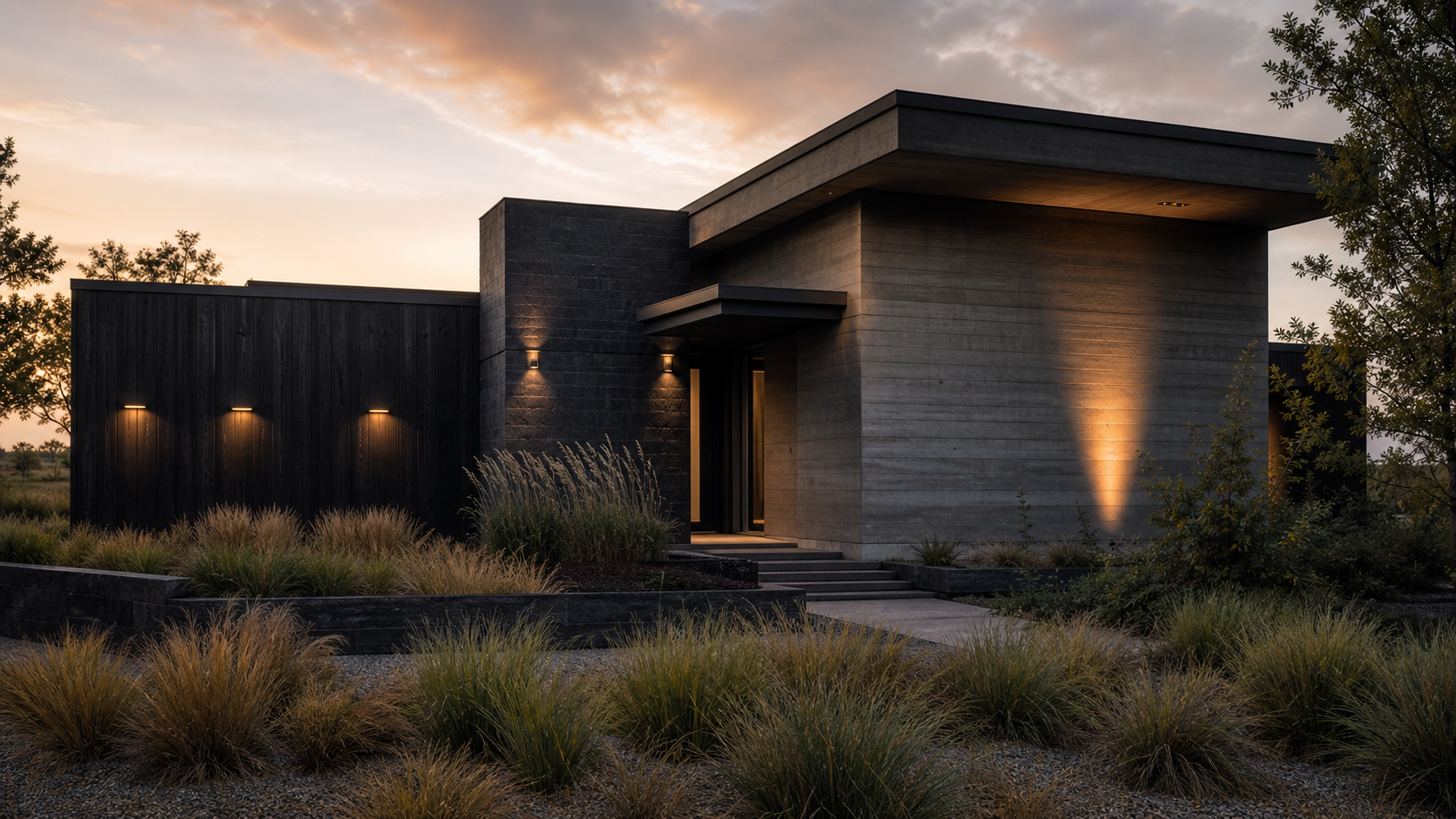
Soft brutalism is the 2026 material palette pairing raw concrete, charred timber, and near-black stone with warm wood, brass, and soft textiles. The result reads industrial from a distance and inviting up close, and it's quickly becoming one of the most requested looks in luxury custom home design.
What Is Soft Brutalism?
Classic brutalism was cold and monolithic. Soft brutalism keeps the honesty of exposed concrete and raw stone, but tempers it with materials that carry heat and grain: white oak ceilings, aged brass fixtures, boucle upholstery, linen drapery. In our studio, we treat it less like a style and more like a contrast strategy — hard against soft, matte against warm, mineral against organic.
The Core Material Palette
Four materials do most of the work in a soft brutalist Houston home. Getting the ratio right is what separates a warm, livable space from a cold, showroom-like one.
- Board-formed or polished concrete for floors, feature walls, and fireplace surrounds
- Charcoal-gray to almost-black limestone or slate for facades and countertops
- White oak or charred cedar (shou sugi ban) for ceilings, cabinetry, and screening
- Aged brass, bronze, or blackened steel for hardware, railings, and light fixtures

Why It Works in the Houston Climate
Concrete and limestone are dense, durable, and low-maintenance against Gulf Coast humidity, UV exposure, and severe weather, while timber accents keep interiors from feeling institutional. Dark stone facades also absorb heat, so we pair them with deep overhangs and shaded terraces to manage solar gain rather than fight it. Done well, the palette is as practical as it is striking for a custom home in Houston, Fulshear, or the Hill Country.
Where We Use It Room by Room
A living room might get a board-formed concrete fireplace wall flanked by white oak built-ins, while a primary bath pairs a slate-gray limestone slab shower with warm brass fixtures and a wood vanity. The kitchen island is often the one place we let concrete carry the whole room — a single honed slab with visible form lines reads as sculpture, not just countertop.

Sourcing and Sequencing the Materials
Board-formed concrete is poured on-site with reusable form liners that leave a wood-grain or plank texture, so the finish is set at the framing stage, not added later. Limestone and slate arrive as engineered panels or thick slabs and typically get sequenced after the building envelope is dried in. Charred timber is either factory shou sugi ban or site-finished, and it needs to go up before final electrical trim so fixture cutouts land cleanly. We start a conversation with the studio early in schematic design specifically so these sequencing decisions get locked before construction pricing, not after.
Budgeting for a Soft Brutalist Build
Board-formed concrete and natural stone cost more than stucco or brick veneer, largely due to formwork labor and slab weight, but a home doesn't need the full palette everywhere. We often reserve concrete and dark stone for two or three anchor moments — an entry wall, a fireplace, a primary bath — and let drywall and paint carry the rest of the square footage at a lower cost.

Key Takeaways
- Soft brutalism pairs raw concrete and dark stone with warm wood and brass for a look that's striking but livable
- Concrete and limestone hold up well against Houston's heat, humidity, and storms when detailed correctly
- Concrete's form lines are set during framing, so the material choice has to be locked in early
- Reserving the palette for two or three anchor spaces keeps the budget in check
FAQ
Is board-formed concrete more expensive than stucco?
Yes, typically. Formwork labor, reinforcing steel, and the added weight in the structural design all add cost. Most of our clients use it selectively on feature walls rather than an entire facade to balance impact against budget.
Does dark stone make a Houston home hotter?
Dark surfaces do absorb more heat, which is why we always pair them with shading — overhangs, covered porches, or landscaping — so the stone's color doesn't work against the home's energy performance.
Can this palette work on a smaller custom home, not just a large estate?
Absolutely. A single concrete or limestone feature wall reads just as intentionally in a 2,500-square-foot home as it does in a much larger one — the key is restraint, not square footage.