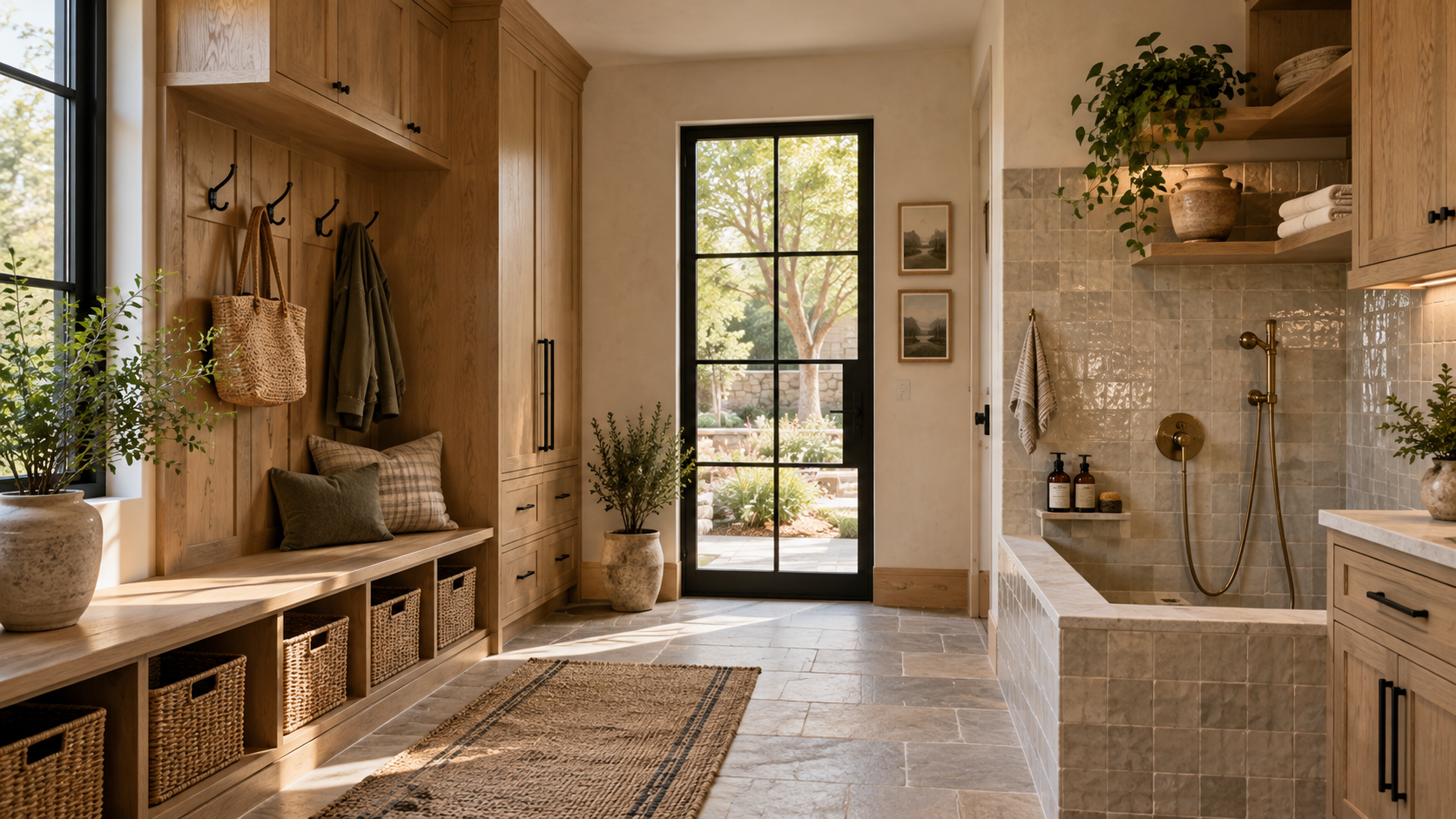
A pet-friendly custom home plans for animals from the first sketch. That means a wash station near the back door, durable floors, hidden feeding spots, and built-in places to sleep, so the house works for the pets without looking like a kennel.
Pets are now part of the brief. Clients tell us how many dogs, what size, whether the cat roams. That one answer reshapes the mudroom, the floors, and even the yard fence. Here is how we think it through.
Key Takeaways
- Put the dog wash station on the path between the yard and the house, with a drain and a handheld sprayer.
- Choose floors by scratch resistance and slip, not just looks.
- Hide feeding and crates inside cabinetry so they disappear when guests arrive.
- Plan the pet door and fence line together, not separately.
Start With the Wash Station
A muddy dog should never cross the kitchen. We place the wash station in the mudroom or garage entry, so the animal is cleaned before it reaches the living space. It is the single feature clients tell us they use every day.
What goes into a good one
A raised, tiled basin or a curbless floor area with a drain, a handheld sprayer on a hose, a mixing valve so the water is warm, and a wall of easy-to-clean tile. Add a ledge for shampoo and a hook for towels. Waterproofing is the part to get right, because it is hard to fix once the tile is set.

Floors That Survive Claws
Floors take the most punishment. Porcelain tile and sealed stone shrug off claws and accidents. Hardwood can work if you pick a harder species with a wire-brushed or matte finish, which hides scratches better than a gloss.
- Porcelain tile: nearly scratch-proof and easy to clean, but hard on joints and can be slick for older dogs.
- Engineered hardwood, wire-brushed: warm underfoot, and scratches blend into the texture.
- Sealed natural stone: durable, but needs sealing against stains.
Think about traction too. Dogs slip on polished surfaces, and a slip hurts an older animal more than a scratch hurts a floor.

Feeding, Sleeping, and Crates
Bowls on the kitchen floor are a trip hazard and a visual mess. We build feeding drawers into the island or a lower cabinet, with a pull-out tray and a nearby water source. Crates get the same treatment.
The built-in crate
A crate sized into a cabinet run under the stairs or in the mudroom bench gives the dog a den and keeps the room tidy. Add ventilation, a slatted or glass-fronted door, and a power outlet nearby for a fan or camera.

Doors, Yards, and Fences
A pet door is a hole in your envelope, so decide early where it goes and how it seals. In Houston's heat and humidity, an insulated, magnetic-seal door matters. It should open onto a fenced yard, so the fence and the door are planned together.
Outside, shaded turf or crushed granite near the door handles wet weather better than lawn. Our team can fold all of this into your plans. If you are starting a home, start a conversation with the studio and tell us who is in the family, four-legged members included.

FAQ
Do we need a dog wash station if we only have a small dog?
Often yes. A small basin or a tiled corner with a sprayer costs little when planned in the design phase, and saves daily cleanup in wet seasons.
What is the best flooring for pets?
Porcelain tile is the toughest. Wire-brushed engineered hardwood is the best warm option, because the texture hides scratches.
Where should the pet door go?
On a back or side wall that opens to a fenced yard, near the mudroom, and away from the main entertaining views.