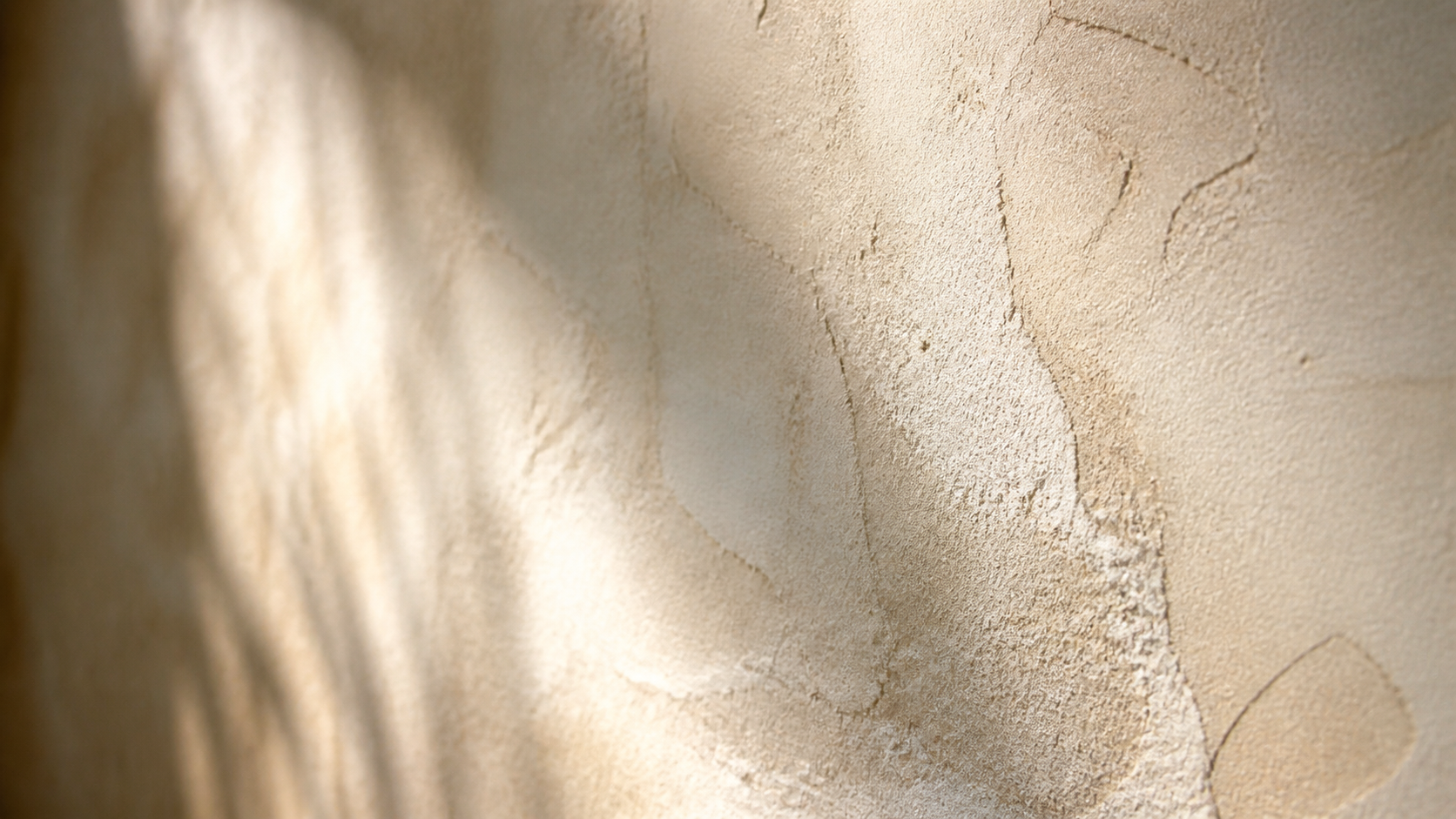
The short answer: limewash is the softest and cheapest of the three, Roman clay is the middle ground with a hand-troweled suede texture, and Venetian plaster is the polished, hardest, most expensive finish. All three are lime-based mineral coatings that breathe, and all three replace the flat, dead look of rolled paint with a wall that changes as the light moves across it.
Key Takeaways
- Limewash: roughly $3–$8 per square foot installed, cloudy and matte, easiest to touch up and re-coat.
- Roman clay: a troweled clay-and-lime skim, smoother than limewash, no burnishing step, moderate cost.
- Venetian plaster: roughly $8–$30 per square foot installed, burnished to a marble-like sheen, hardens for years after it cures.
- All three are vapor-open, so wall assemblies can dry inward — useful in a humid climate.
- Only limewash is realistically DIY. Roman clay and Venetian plaster live or die on the applicator, not the product.
What Makes a Finish "Mineral"
Conventional paint is a plastic film. It sits on top of the drywall, seals it, and reflects light back uniformly — which is exactly why a painted wall reads flat in photographs and flatter in person. A mineral finish is lime, marble dust, or clay carried in water. It cures by absorbing carbon dioxide and turning back into a mineral crust bonded to the substrate.
That chemistry produces two things we design around. The surface is slightly translucent, so light penetrates a fraction of a millimeter before bouncing back, which is what creates the depth. And the surface stays porous, so moisture inside the wall can pass through instead of blistering the coating.

Limewash: Soft, Cloudy, Forgiving
Limewash is slaked lime thinned with water and brushed on in two or more coats. It dries to a chalky matte with visible cloud movement — soft edges, no sheen, a faint mottle that reads as age rather than pattern. It is the finish people are describing when they say a room feels European or plaster-y without being able to name why.
We reach for limewash on large surfaces where cost per square foot matters: whole-house wall fields, bedrooms, stair volumes, and masonry exteriors. It is also the most repairable of the three. A new coat blends into the old one, which is not true of anything burnished.

Roman Clay: The Middle Ground
Roman clay is a thin, troweled skim coat — clay and lime rather than pure lime — applied with a flat steel blade in two passes. The result is smoother and more uniform than limewash, closer to suede or unglazed pottery, with soft directional movement where the trowel traveled.
It is the finish we specify most often when a client likes the plaster look but wants it quieter and more even. Because there is no burnishing step, it costs meaningfully less than Venetian plaster while still delivering a genuinely troweled surface. It takes fingerprints and scuffs more readily than a burnished wall, so we keep it off circulation pinch points and mudroom walls.
Venetian Plaster: Polished and Permanent
Venetian plaster is lime putty loaded with fine marble dust, laid in multiple thin layers and then burnished with the trowel until the surface takes on a low marble sheen. It is the most labor-intensive of the three by a wide margin — more coats, cure time between them, and a finishing pass that cannot be rushed.
What you buy for that money is depth and hardness. The wall keeps curing for years and ends up genuinely tough, which is why we use it where the surface will be touched and looked at closely: powder rooms, entry walls, a fireplace surround, the inside face of a stair volume. Used everywhere it becomes exhausting; used on one or two surfaces it carries the whole room.

Cost, Durability, and Where the Money Goes
Material is the small half of the number. Limewash runs roughly $40–$80 a gallon and Venetian plaster $150–$300, but the spread in installed price comes almost entirely from labor hours and skill.
- Limewash: about $3–$8 per square foot installed; expect 10–15 years before you want a refresh coat.
- Roman clay: typically lands between the two; two troweled passes, no burnish.
- Venetian plaster: about $8–$30 per square foot installed; 15–20+ years, and it hardens rather than degrades.
- Budget for a sample board, not a color chip. These finishes only show their real character at full scale under the room's actual light.
Why Mineral Finishes Suit a Humid Gulf Coast House
Houston walls need to dry. Between summer dew points in the seventies, air conditioning running most of the year, and the vapor drive that combination creates, any assembly that traps moisture on the inside face is asking for trouble. A vapor-open lime finish lets the wall breathe inward instead of pushing the problem back into the cavity.
Lime is also alkaline, which discourages mold on the surface itself. On exteriors, limewash over masonry weathers by thinning and softening rather than peeling in sheets — a far better failure mode than a film-forming paint on a brick wall in this climate.

How We Specify It
We decide the finish during design development, not at the paint meeting, because it changes the drywall level, the trim details, and sometimes the lighting plan — a grazing wall wash makes plaster sing and makes bad drywall prep obvious. If you are weighing mineral finishes for a project, start a conversation with the studio and we will walk the tradeoffs against your actual rooms.
Frequently Asked Questions
Can mineral finishes go over existing drywall?
Yes. All three need a primer coat and a properly prepped substrate. Venetian plaster is the least forgiving — every seam, screw dimple, and patch telegraphs through a burnished surface, so the drywall prep has to be a level higher than you would accept under paint.
Are these finishes washable in a kitchen or bathroom?
Venetian plaster handles wet rooms well once cured and can be sealed for splash zones. Roman clay tolerates a gentle wipe. Limewash is the most porous of the three and stains most easily, so we keep it away from backsplashes and shower walls.
Will the wall look blotchy?
It will look varied, which is the point — but there is a line between intentional movement and a bad application. Always approve a large sample from the actual crew who will do the work, viewed on site at the time of day the room matters most.
Choose limewash for warmth across large areas, Roman clay for a quieter troweled surface, and Venetian plaster for the one or two walls that deserve to be the room's best material.