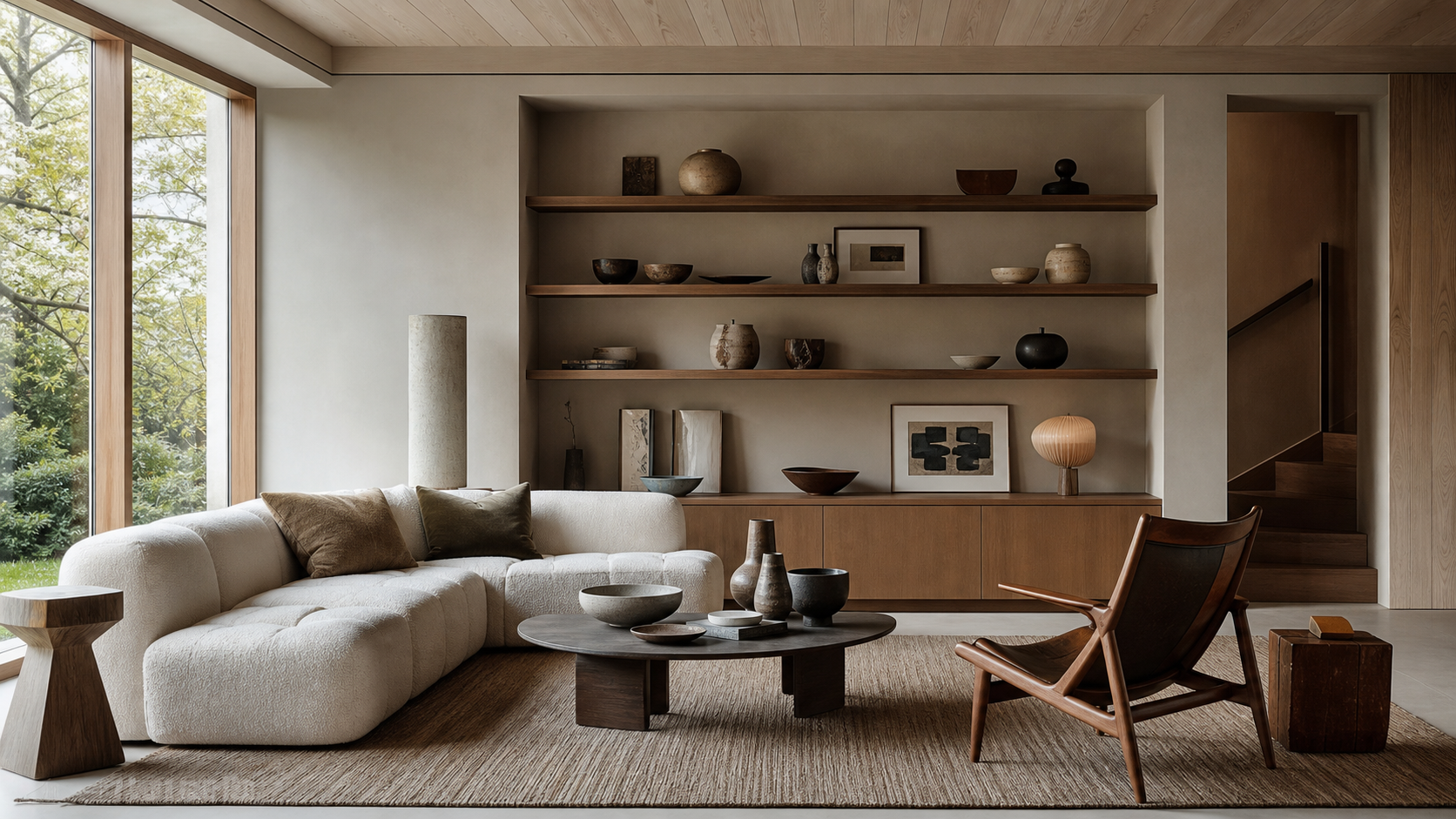
Midimalism is a 2026 interior design style that sits deliberately between minimalism's restraint and maximalism's excess, letting a home carry curated collections, mixed eras, and personal texture without ever tipping into clutter. For clients who found all-white minimalism cold and full maximalism exhausting, it's become the most requested middle ground we design into custom Houston homes right now.
Why Midimalism Is Replacing Strict Minimalism
Pure minimalism photographs beautifully but is hard to actually live in — no shelf for the travel pottery, no wall for the art collection, no room for the things a family accumulates over twenty years. Midimalism keeps minimalism's discipline around scale, proportion, and negative space, but drops the rule that every surface has to stay empty.
- Retains minimalism's restraint on color, scale, and clutter-free circulation paths
- Borrows maximalism's permission to display collections, art, and layered textiles
- Mixes furniture eras and finishes deliberately instead of matching a single style
- Prioritizes quality, craftsmanship, and personal story over matching sets
- Reads as warmer and more lived-in than a strict all-white minimalist room
How We Build It Into a Floor Plan
Midimalism is easiest to get right when it's planned at the architecture stage rather than layered on after the fact. Built-in display niches, a dedicated gallery wall run, and open shelving sized for a specific collection all need to be drawn into the millwork package before drywall goes up — retrofitting a bookshelf-worthy wall into a finished room rarely looks intentional.

Built-In Display Zones
The most reliable move is a single, well-lit display wall or niche per major room — one spot for the collection, rather than every surface competing for attention. Recessed shelving with integrated low-voltage lighting reads as architecture rather than decoration, which keeps a midimalist room from sliding into visual noise.
Material and Color Strategy
Midimalism's palette leans on beige, taupe, soft white, light wood, cane, stone, and linen as the quiet base layer, then lets furniture, art, and textiles carry the personality and contrast. That base has to be consistent across a home's finish schedule — flooring, cabinetry, and trim all pulling from the same warm-neutral family — so the curated pieces have a calm backdrop to stand out against.
Mixing Eras Without It Looking Accidental
A vintage piece next to a contemporary sofa only works when they share a material logic — the same wood tone, a similar scale, or a repeated color note. We treat this the same way we treat any material palette: pick two or three anchor materials and let every mixed-era piece in the room relate back to at least one of them.

Where Midimalism Fits in a Custom Home
This style tends to work best in the rooms a family actually lives in day to day — living rooms, primary bedrooms, studies, and dining rooms — while entry sequences and bathrooms often stay closer to pure minimalism for contrast. That contrast between a quiet foyer and a richly layered living room is itself a midimalist move: restraint in the transition spaces, personality in the rooms where people gather. If you're planning a new build or renovation and want that balance built in from the first floor plan, start a conversation with the studio.
Key Takeaways
- Midimalism blends minimalism's restraint with maximalism's personal collections and layered texture
- It needs to be planned into the architecture — display niches and shelving belong on the millwork drawings, not added later
- A consistent warm-neutral material palette lets mixed-era furniture and art read as curated, not cluttered
- It suits lived-in rooms best, often paired with quieter, more minimalist entry and bath spaces for contrast
FAQ
Is midimalism just maximalism with a new name?
No — maximalism embraces density and pattern everywhere, while midimalism keeps minimalism's clean lines and negative space and only layers personality into specific, curated zones.
Does midimalism cost more to design than minimalism?
Not necessarily more expensive, but it does require more upfront planning — built-in display millwork and a considered lighting plan for collections both need to be designed early rather than bolted on later.
Can midimalism work in a smaller home?
Yes, and often works better in a smaller footprint, since a single well-planned display wall reads as more intentional in a compact room than it would spread across a very large open plan.
A Style Built Around How You Actually Live
The clients who ask for midimalism are almost always the ones who tried to picture themselves in a stark minimalist rendering and realized their books, art, and travel finds had nowhere to go. Designing for that reality from day one — rather than fighting it after move-in — is what makes a midimalist home feel both disciplined and genuinely personal. Take a look at our portfolio for examples of how we've layered collections into custom Houston homes without losing that sense of calm.