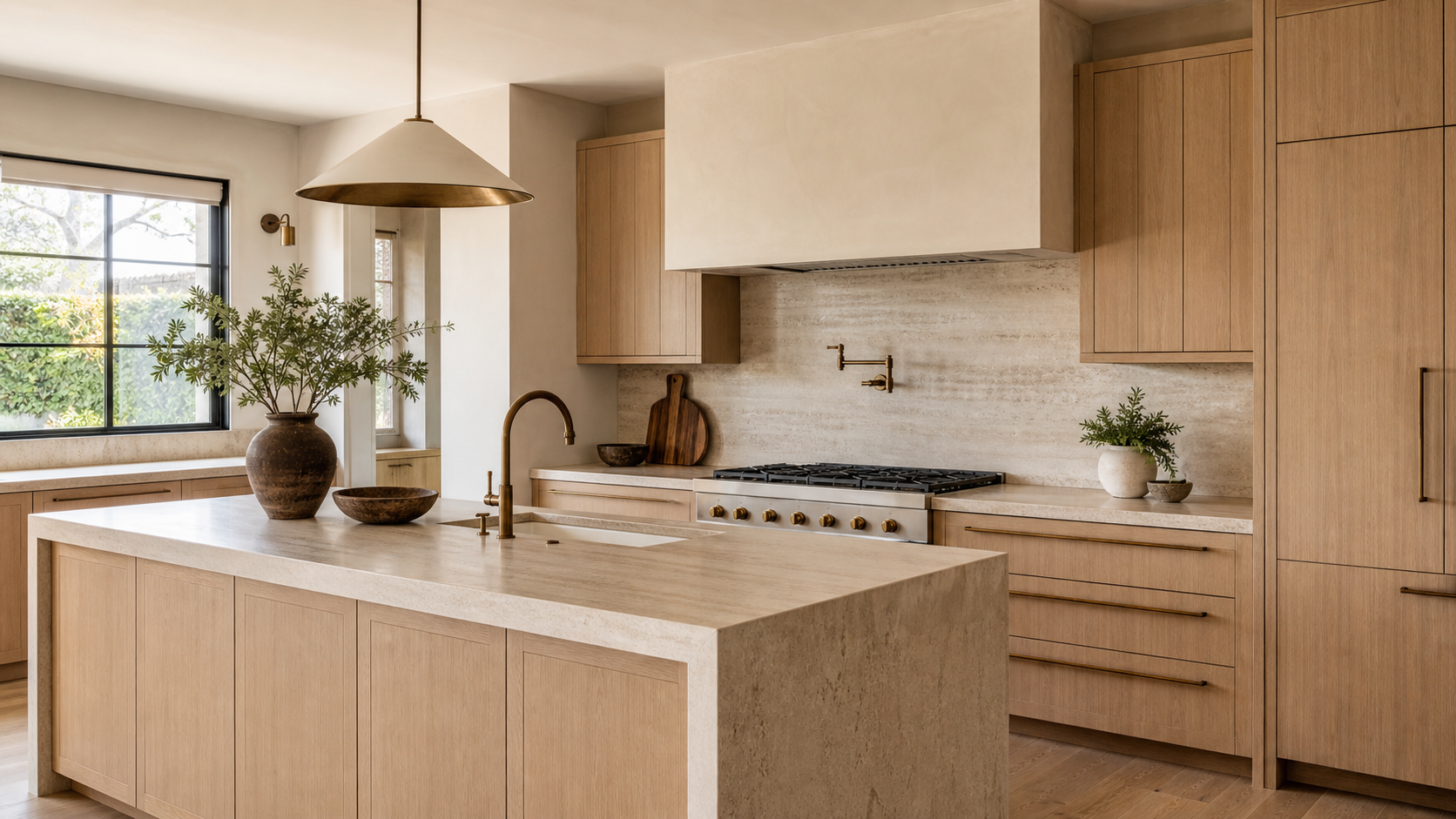
Quiet luxury and Japandi design pair warm wood, natural stone, and soft earthy color in place of the cool gray palette that defined the last decade of modern interiors. In a custom home, it shows up in material choice, floor plan, and light — not just paint color.
What Do 'Quiet Luxury' and 'Japandi' Actually Mean?
Quiet luxury describes a home that reads expensive through material quality and restraint rather than logos, high shine, or visual noise. Japandi fuses Japanese minimalism with Scandinavian warmth: clean lines, low furniture profiles, and natural materials, but softened with texture and a lived-in warmth that pure minimalism often lacks. Together they describe the dominant residential aesthetic we're designing toward this year — searches for Japandi style are up sharply year over year, and it's the look most new clients bring to us as reference images.
Why the All-Gray Modern Look Is Fading
Cool gray-on-gray interiors photographed well for a decade, but they age flat in person and under Houston's warm natural light. Homeowners are asking for spaces that feel calm and grounded rather than showroom-cold. Warm modern answers that: the same clean architectural lines, but rendered in materials with grain, veining, and depth instead of flat painted surfaces.
- Warm wood tones and natural stone are replacing painted cabinetry and cool quartz as the default kitchen palette
- Layered beiges, soft greens, and warm neutrals are replacing gray as the base wall color
- Low-profile furniture and simplified millwork keep rooms feeling uncluttered without feeling cold
- Biophilic details — greenery, natural light, indoor-outdoor sightlines — are now expected, not optional
- Smart home tech is being designed to disappear into the finishes rather than announce itself
Core Materials of a Warm-Modern Custom Home
Wood, Stone, and Warm Metal in Place of Gloss and Chrome
The material palette leans on white oak and walnut millwork, honed natural stone (limestone, travertine, warm-veined marble), and brushed or aged brass and bronze hardware in place of polished chrome. These materials carry the visual weight in a Japandi-influenced home, so the architecture around them stays simple — flat panel cabinetry, minimal trim, and generous negative space let the material texture do the talking.

Color: Earthy Neutrals Instead of Cool Gray
The 2026 palette runs warm: sand, clay, soft sage, and layered beige rather than greige or cool gray. These tones read as calm rather than sterile, and they pair naturally with wood and stone instead of fighting them the way blue-toned grays often do.
It's a Floor Plan Decision, Not Just a Finish Schedule
Japandi's minimalism only works if the plan supports it. That means fewer decorative built-ins competing for attention, generous storage tucked out of sight so surfaces stay clear, and sightlines planned so a room's material and light do the visual work instead of furniture density. We design this in from the earliest floor plan sketches, because a warm-modern material palette applied to a cluttered layout just looks busy, not calm.

Biophilic Details That Reinforce the Look
Quiet luxury and biophilic design overlap heavily: both favor natural materials, filtered daylight, and a visual connection to the outdoors. In practice that means deep window openings framing a courtyard or garden, a covered outdoor room finished in the same wood and stone as the interior, and planting placed to be seen from the main living spaces rather than only from the yard. If you're weighing this direction for your own project, start a conversation with the studio and we can talk through what it looks like on your lot.

Frequently Asked Questions
Is Japandi the same as minimalism?
Not quite. Minimalism strips a room down; Japandi keeps the restraint but adds warmth back in through natural materials, texture, and softer color, so the result feels calm rather than empty.
Does warm-modern design cost more than an all-gray build?
Not inherently. The palette shifts material selection — wood and natural stone in place of some painted surfaces and manufactured quartz — but the cost impact depends on the specific materials chosen, not the aesthetic itself.
Will this look date the way gray modern did?
Warm materials like wood and stone have anchored residential design for centuries, which is part of why they read as timeless rather than trend-driven. The specific accent colors will shift over time, but the underlying material palette ages well.
Can an existing gray-modern home be shifted toward this look?
Yes, usually through a remodel focused on cabinetry, countertops, and wall color rather than a full rebuild — swapping cool finishes for warm wood, stone, and earthy paint tones goes a long way without touching the floor plan.