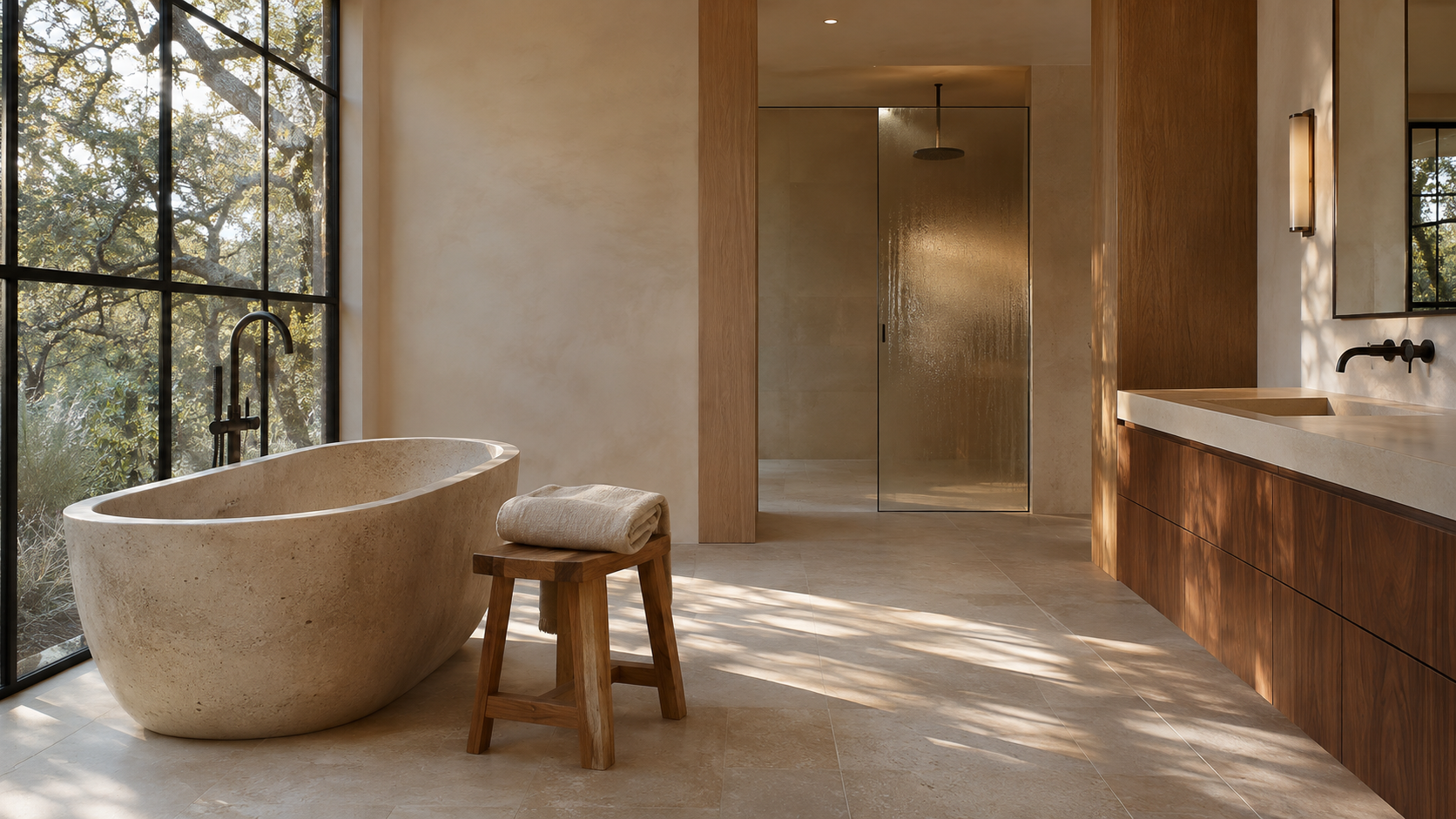
Heated floors are worth it in a custom home when they go where bare feet meet cold, hard flooring: the primary bath, the mudroom, a stone-floored kitchen. Whole-house radiant floor heating can be wonderful too, but only in a tight, well-insulated house, and only if it is planned before the slab or subfloor is built.
As experts in home design, we get asked about heated floors early in almost every project, usually right after someone remembers a hotel bathroom. The honest answer depends on three things: which system, which rooms, and what is going on top of it.
Key Takeaways
- Electric mats are the right tool for individual rooms like baths and mudrooms; hydronic (hot-water) tubing is the right tool for whole floors.
- Tile, stone, polished concrete, and engineered wood work well over radiant heat. Thick carpet and rugs work against it.
- Radiant heat is comfort first. It warms surfaces and feet, not just air, so rooms feel warmer at a lower thermostat setting.
- The decision belongs in design, not construction: tubing lives in the slab or subfloor, and electric mats need dedicated circuits and thermostats.
- In a mild-winter climate like Houston, targeted electric heat in a few rooms usually beats a whole-house system.
Electric Mats or Hydronic Tubing: The Two Kinds of Radiant Heat
Electric radiant mats
Electric systems are thin heating cables or mats set in the thinset just under tile or stone. They are inexpensive to install, need no boiler, and each room gets its own thermostat. That makes them ideal for a primary bath, a powder room, or a laundry with a tile floor.
The tradeoff is operating cost at scale. Running electric resistance heat under an entire house is expensive, so we treat electric mats as a comfort upgrade in specific rooms rather than as the home's main heat source.

Hydronic radiant tubing
Hydronic systems circulate warm water through PEX tubing embedded in a concrete slab or fastened beneath a wood subfloor, fed by a boiler, water heater, or heat pump. They cost more up front and take mechanical planning, but they are efficient over large areas and deliver the even, quiet warmth people describe as the best heat they have ever lived with.
Hydronic tubing is also the version you cannot add later. Once the slab is poured, the decision is made. If the tubing goes in a slab, it has to be coordinated with the foundation design and the structural engineer, which starts with what the soil report tells you before the structural drawings.
Where Heated Floors Pay Off
Radiant heat is at its best where people stand barefoot or in socks on materials that feel cold. In our experience, these are the rooms where owners notice it every single day:
- Primary bath: the first room most clients ask for, and the one they are happiest with.
- Mudroom and back entry: warm tile dries wet boots and paws faster.
- Kitchen with stone or tile: long stretches of standing at the island or range.
- Basement or slab-level rooms: concrete floors stay cool most of the year.
- Wet rooms and curbless showers: a warm floor dries quickly after use.
Bedrooms, closets, and carpeted media rooms are usually poor candidates. Carpet and pad insulate the floor from the heat, and those rooms are rarely where cold feet are the complaint.

What Goes on Top Matters
The floor finish decides how well radiant heat works. Tile, stone, and polished concrete are the best partners because they conduct and hold heat. Engineered wood works well too, because it stays more stable than solid hardwood through temperature swings. Solid hardwood can be used with care, but wide planks may gap or cup if the system runs hot.
Large area rugs and thick carpet act like a blanket over the heat. If a room will be mostly carpet, heated floors are not the right investment for it.
Heated Floors in Houston and Mild-Winter Climates
Houston has short, damp winters and long, hot summers. A whole-house hydronic system sits idle most of the year, and every home still needs ducted air conditioning and dehumidification. For most of our Texas clients, that means radiant heat is a comfort feature rather than the heating system.
Our design experts usually recommend electric mats in the primary bath, the mudroom, and any tiled kitchen, with the ducted heat pump handling the rest. Clients building in the Hill Country, where winter nights are colder and stone floors are common, have a stronger case for hydronic heat in the main living areas.

How to Plan Radiant Heat During Design
- Decide which rooms get heat during schematic design, before the floor plan is locked.
- Pick floor finishes alongside the heat, since tile, stone, and wood each change the system.
- Show electric mat zones, thermostats, and dedicated circuits on the electrical plan.
- For hydronic, size the boiler or heat pump and locate the manifold with the mechanical engineer.
- Coordinate slab insulation and tubing layout with the foundation design before the pour.
Handled this way, heated floors become part of the house rather than an add-on. If you are weighing radiant heat for a new home, start a conversation with the studio and we will help you decide where it belongs.
Frequently Asked Questions
Can radiant floor heating heat a whole house?
Yes, a hydronic system can be the primary heat in a well-insulated, airtight house. It still needs a separate system for cooling and humidity control, which in Texas means ducted air conditioning regardless.
Do heated floors work under wood?
Engineered wood works well over radiant heat because it resists movement. Solid hardwood can work with narrower boards and a carefully controlled floor temperature.
Can heated floors be added later?
Electric mats can be added during a bathroom remodel when the tile is replaced. Hydronic tubing in a slab cannot be added after the pour, which is why we bring it up early with expert guidance during design.