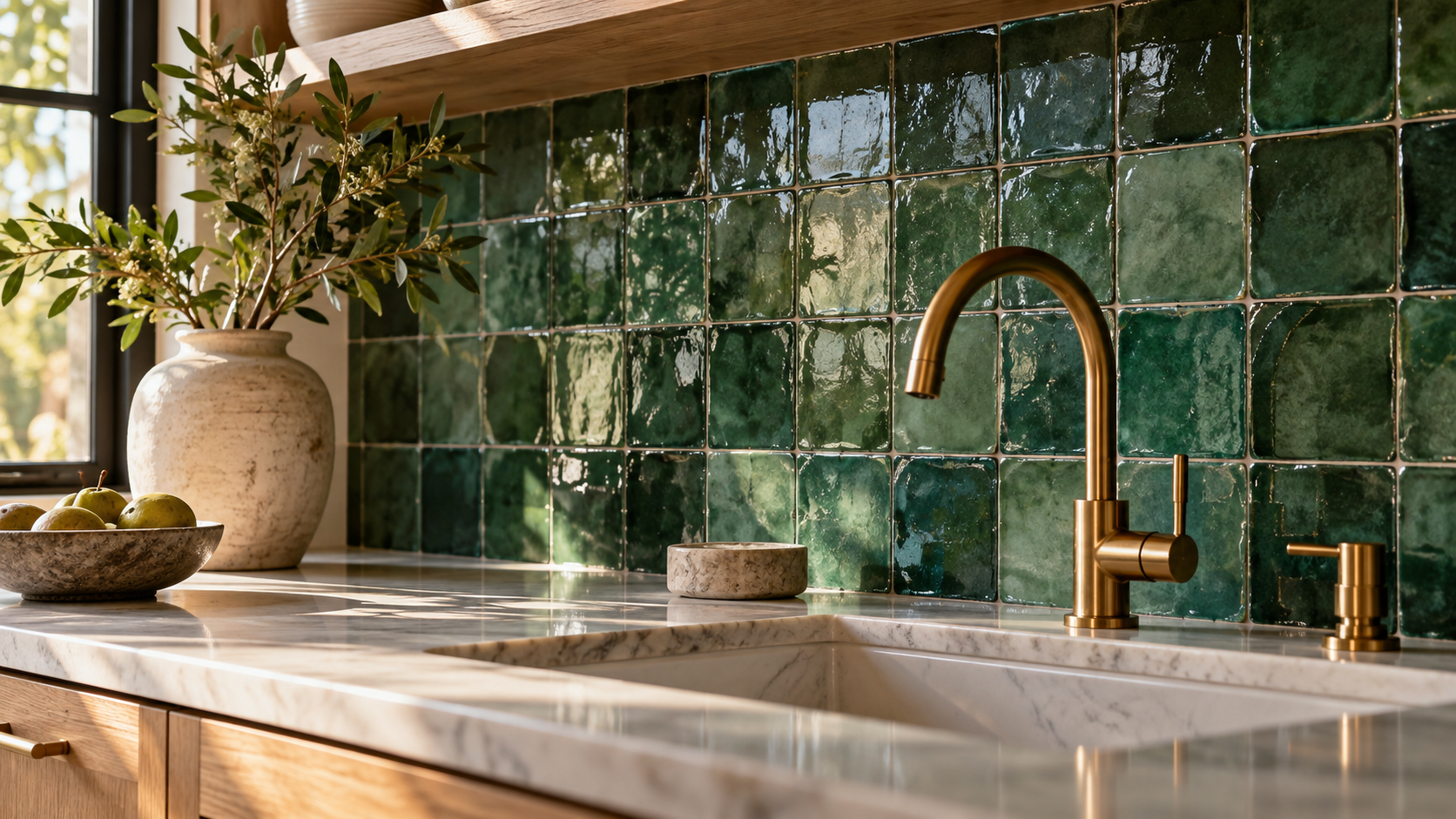
Handmade tile earns its cost on the surfaces you see up close and touch every day: the kitchen backsplash, a shower wall, the powder room, a fireplace face. Across a whole floor or a large utility room, its variation reads as noise, and machine-made tile does the job for a fraction of the price.
Warm, imperfect materials are where residential design is heading this year. Homeowners are tired of flat white and gray, and handmade tile is one of the most direct ways to bring texture and history back into a house. But zellige, terracotta, and glazed ceramic behave very differently, and choosing the wrong one for a room is an expensive mistake to live with.
Key Takeaways
- Use handmade tile where the eye lands and the hand touches: backsplashes, shower walls, powder rooms, fireplace surrounds.
- Zellige is glossy and uneven, best on walls; terracotta is warm and porous, best on floors that get sealed; glazed ceramic is the most forgiving all-rounder.
- Irregular tile needs a skilled setter and a grout plan decided at the design stage, not on install day.
- Order 15 to 20 percent overage and keep a boxed reserve, because the next batch will never match exactly.
What Makes Tile Handmade, and Why It Looks Different
A handmade tile is formed, cut, or glazed by hand rather than pressed and printed by machine. Every piece has slight changes in thickness, edge, and color. Lay a hundred of them together and the wall moves with the light in a way a printed porcelain never will.
That variation is the whole point, and it is also the whole challenge. Edges are not perfectly square, faces are not perfectly flat, and no two boxes are identical. The studio treats handmade tile less like a finish and more like a craft material, closer to plaster or stone than to a commodity product.

Zellige, Terracotta, and Glazed Ceramic Compared
Zellige
Zellige is a Moroccan tile of hand-cut glazed clay, known for its deep gloss and pitted, rippled surface. It is at its best on vertical surfaces: backsplashes, shower walls, and a recessed niche. Its uneven face makes it a poor floor choice, since the high edges catch feet and dirt.
Terracotta
Terracotta is unglazed fired clay, warm in color and soft underfoot. It belongs on floors in kitchens, entries, and covered porches, where it wears in beautifully over decades. It is porous, so it must be sealed before grouting and resealed on a schedule, or it will stain.
Glazed ceramic
Hand-glazed ceramic tile is the most forgiving of the three. The body is more regular, so it sets flatter, while the glaze still pools and breaks with real variation. It is the right choice when a client wants handmade character in a shower or a large wall without the irregularity of true zellige.
Where Handmade Tile Belongs in a House
We place handmade tile where people stand still and look. The kitchen backsplash behind the range is the classic spot. A powder room is another, because it is small enough to afford a premium tile floor to ceiling and it is the room every guest sees. A primary shower wall works well when the rest of the bath is kept calm.
Fireplace faces, shelving niches, and the risers of a short entry stair are also strong candidates. Areas we steer clients away from: whole-house floors, laundry rooms, garages, and any wall that will be mostly covered by cabinets or furniture. Money spent where nobody looks is better moved to where everybody does.

Installation: Where Handmade Tile Succeeds or Fails
The most beautiful tile in the world looks cheap if it is set badly. Irregular tile needs a setter who has done it before and who understands that the goal is a consistent overall field, not perfect alignment piece by piece. We ask for photos of a setter's past handmade work before the tile is ordered.
Grout width and color
Zellige is usually set nearly tight with a narrow grout joint, so the tiles read as one shimmering surface. Terracotta takes a wider joint that frames each piece. Grout color matters more here than with machine tile: a close match lets the tile lead, while a contrasting grout turns the wall into a grid. We decide this in the drawings, not on install day.
Overage and reserve
Order 15 to 20 percent extra, more than the usual 10 percent, because some pieces will be culled for chips or odd color. Blend tiles from several boxes as you set so no one patch is darker. Then keep a sealed reserve box in the attic. If a tile cracks in ten years, a new batch will never match.

Handmade Tile in a Humid Climate
In Houston and along the Gulf Coast, humidity changes how we detail tile. Showers need a fully waterproofed substrate behind any tile, because handmade pieces with pitted glazes and wider joints give water more places to find its way in. Unglazed terracotta on an outdoor porch needs a breathable penetrating sealer so trapped moisture can escape rather than lifting the finish.
Covered outdoor floors should also be pitched slightly to drain and set on a bed designed for movement, since the Texas heat swings are hard on rigid installations. None of this is exotic, but it has to be drawn and specified rather than left to chance.
Frequently Asked Questions
Is zellige tile hard to clean?
Not on a wall. The glaze is glossy and wipes clean like any glazed tile. The only care point is the grout, which should be sealed so it does not darken behind a range or sink.
Can handmade tile go on a shower floor?
Glazed ceramic in a small format can, if it is rated for floors and slip resistance. We avoid true zellige on shower floors, because its uneven surface holds water and is slippery when wet.
How much more does handmade tile cost?
The tile itself often costs three to five times a good porcelain, and setting labor runs higher too. That is why we concentrate it in a few small, high-impact areas instead of spreading it thin across the house.
Tile is one of the few finishes a house can wear for fifty years, so it pays to choose it with the same care as the floor plan. If you are weighing materials for a new home, start a conversation with the studio and we will help you decide where craft belongs and where it doesn't.