As residents of the Gulf Coast, particularly in the sprawling Houston metropolitan area, the annual hurricane season is a significant concern. Proactive preparation is not merely advisable; it is imperative for safeguarding lives and property. With the 2026 hurricane season on the horizon, the focus for homeowners and developers in Houston, Pearland, Sugar Land, and Katy must shift towards implementing comprehensive hurricane-resilient home design. This guide delves into the technical aspects of architecture, building science, and construction, offering strategies to fortify structures against the formidable challenges posed by severe tropical weather.
Understanding Houston's Unique Climate and Risks
The geographical position of the Greater Houston area, encompassing Harris County, Fort Bend County, and Brazoria County, renders it particularly vulnerable to hurricanes and tropical storms. The combination of its proximity to the Gulf of Mexico, low elevation, and extensive bayou system creates a complex risk profile that demands specialized building approaches. Understanding these specific threats is the foundation of effective resilient design.
Historical Context and Future Projections
Houston has a long history of confronting powerful storms, from Hurricane Alicia in 1983 to Hurricanes Ike (2008) and Harvey (2017), which left indelible marks on the region. These events have underscored the evolving nature of hurricane threats, including increased rainfall intensity and potential for rapid intensification. Climate projections suggest that future seasons, including 2026, could bring more frequent and intense storms, making robust home design a critical investment rather than an optional upgrade for properties from Pearland to Katy.
The Dual Impact of Water: Flooding and Storm Surge
The primary threats from hurricanes in the Houston area are not solely high winds but also the devastating effects of water. Storm surge, particularly for communities closer to the coast in Brazoria County, can inundate vast areas, while torrential rainfall consistently leads to widespread inland flooding across Harris County and Fort Bend County. Resilient design must therefore address both direct wind forces and hydrostatic pressure, along with long-term moisture management to prevent secondary damages like mold and structural decay.

Architectural Principles for Hurricane Resilience
Effective hurricane-resilient architecture goes beyond mere aesthetics, integrating structural integrity and protective features from the initial design phase. Thoughtful architectural choices can significantly mitigate damage, enhancing a home's ability to withstand severe weather events.
Foundation Fortification
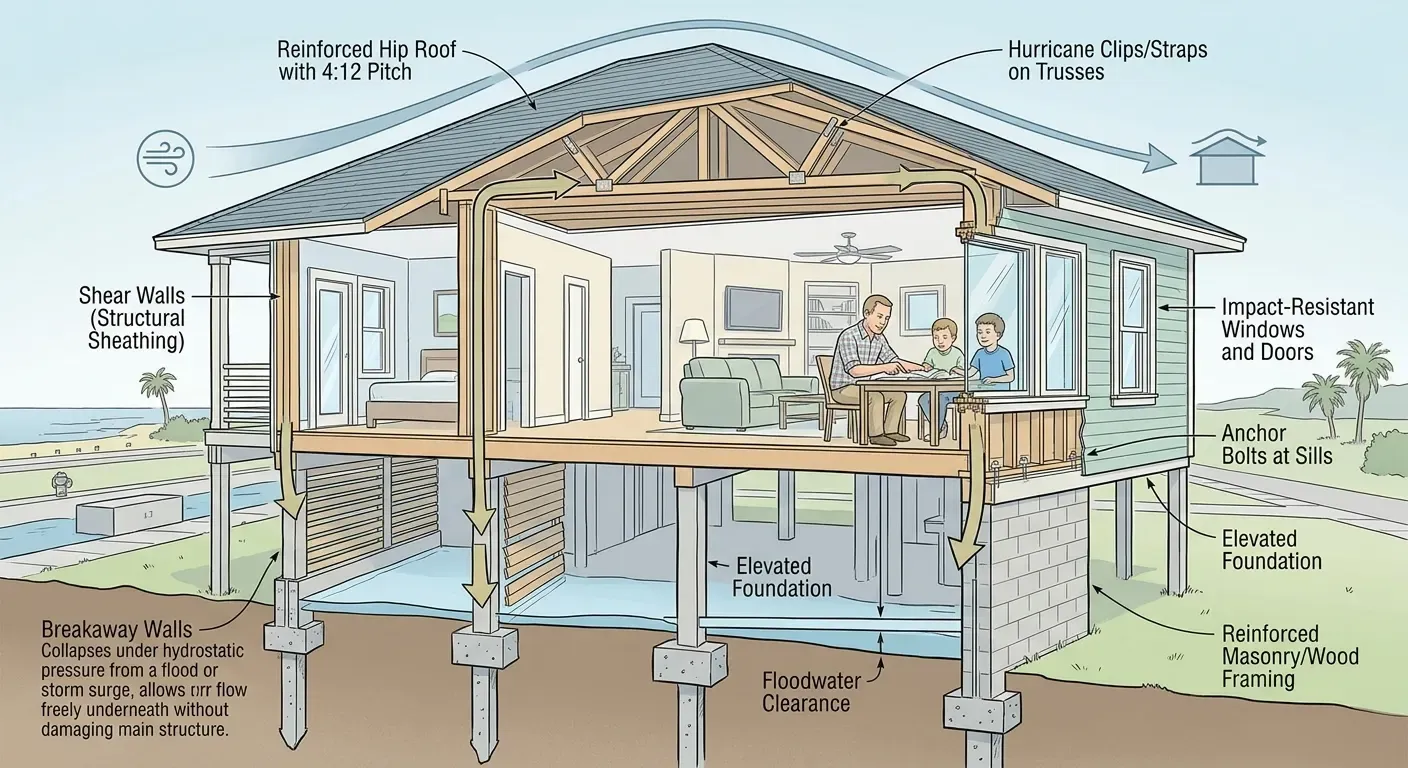
The foundation is the bedrock of a resilient home. For properties in flood-prone areas, especially along bayous in Houston or near coastal zones in Brazoria County, elevated foundations are paramount. Options include pier-and-beam construction with breakaway walls or elevated slab foundations that raise the living space above the projected base flood elevation (BFE). A continuous load path, achieved through proper strapping and anchoring from the roof down to the foundation, ensures that the entire structure acts as a cohesive unit against uplift and lateral forces.
Aerodynamic Design and Roof System Integrity
The roof is often the first point of failure during high winds. Architectural designs that incorporate hip roofs are generally more aerodynamic and resistant to uplift than gable roofs. Beyond the shape, the integrity of the roof system relies on robust construction. This includes using properly sized and spaced roof sheathing, secured with ring-shank nails or screws, and reinforced trusses connected with hurricane clips or straps. Advanced roofing materials such as metal or synthetic slate, designed for high wind resistance, are also highly recommended for homes in Sugar Land, Pearland, and Katy.
Window and Door Reinforcement
Vulnerable openings like windows and doors are critical points of entry for wind and water. Impact-resistant windows, featuring laminated glass, can withstand direct impacts from flying debris, maintaining the building envelope's integrity. Alternatively, permanently installed hurricane shutters or deployable panel systems offer robust protection. Garage doors, often the largest and weakest opening, require significant reinforcement through vertical bracing and heavy-duty tracks to prevent collapse and subsequent catastrophic internal pressure changes. These considerations are vital for homes throughout Harris County, particularly in exposed areas.
“True hurricane resilience is not an add-on; it's an integrated philosophy, beginning with the very first architectural sketch and realized through meticulous construction and material selection. For Houston homeowners, this means building for the storm before it arrives.”
Advanced Building Science and Material Selection
Building science provides the analytical framework for understanding how buildings perform under stress, informing material selection and construction techniques. Embracing these principles ensures homes are not just strong but also durable and sustainable in the face of Houston’s challenging climate.
High-Performance Building Envelopes
A high-performance building envelope is crucial for both energy efficiency and hurricane resilience. This involves continuous insulation systems that minimize thermal bridging, advanced air sealing techniques to prevent uncontrolled air and moisture infiltration, and robust vapor barriers. These elements contribute to maintaining stable indoor conditions, reducing the potential for moisture-related damage post-storm, and improving comfort for residents in areas like Sugar Land and Pearland.
Moisture Management and Mold Prevention
Given Houston's high humidity and susceptibility to flooding, effective moisture management is critical. This includes designing exterior walls with drainage planes to shed incidental water, proper flashing details around all openings, and adequate attic and crawl space ventilation. Utilizing mold-resistant building materials such as fiberglass mat gypsum board and closed-cell spray foam insulation can significantly reduce the risk of mold growth after water intrusion, a common issue in Harris and Fort Bend Counties following major storm events.
Sustainable and Resilient Material Choices
Selecting materials known for their durability and resistance to harsh weather is fundamental. Fiber cement siding offers superior impact resistance and is impervious to rot and insects, unlike traditional wood. Concrete masonry units (CMU) or insulated concrete forms (ICF) provide exceptional structural strength and thermal performance. For roofing, standing seam metal roofs or high-wind rated asphalt shingles, installed with enhanced fastening schedules, offer long-term protection against wind and rain in exposed areas like Katy and parts of Brazoria County.
Construction Best Practices for Durability
Even the best designs falter without meticulous execution. Adhering to stringent construction practices and utilizing skilled labor are non-negotiable for achieving true hurricane resilience. The quality of construction directly impacts a home's ability to endure extreme forces.
Adherence to Local Building Codes and Standards
Compliance with the International Building Code (IBC) and local amendments is the minimum standard. For coastal regions and specific designated areas, adherence to the Texas Windstorm Insurance Association (TWIA) building codes is mandatory for insurable properties. These codes often dictate higher standards for wind resistance, including specific fastening schedules, material strengths, and inspection requirements. Builders in Houston and surrounding counties must be proficient in these rigorous standards to ensure homes meet the necessary resilience thresholds.
Integrated Construction Techniques
- Utilize continuous load path connections from foundation to roof, employing specialized hardware like hurricane clips and strapping.
- Implement shear walls and bracing systems to resist lateral wind forces effectively.
- Ensure proper embedment and spacing of anchor bolts for foundation plates.
- Apply advanced sealing techniques for all penetrations in the building envelope to prevent water intrusion.
- Use high-quality, corrosion-resistant fasteners throughout the structure, especially in humid coastal environments.
Quality Control and Professional Oversight
Engaging licensed and experienced contractors who specialize in resilient construction is crucial. Regular third-party inspections throughout the construction process ensure that design specifications and code requirements are strictly followed. From foundation pours to roof decking installation, vigilant oversight prevents shortcuts and guarantees the structural integrity needed for a hurricane-resilient home in any part of Harris, Fort Bend, or Brazoria County.
Beyond the Structure: Site Planning and Utilities
Hurricane resilience extends beyond the immediate structure to include the site itself and essential utility systems. Comprehensive planning addresses how the property interacts with its environment and maintains critical services during and after a storm.
Elevated Construction and Drainage Solutions
For new construction or significant renovations in flood zones, elevating the entire structure above the Base Flood Elevation (BFE) is a fundamental strategy. Beyond elevation, site grading should direct water away from the foundation. Permeable paving, rain gardens, and strategically placed French drains can manage stormwater runoff effectively, reducing localized flooding around the home in communities like Pearland and Sugar Land.
Resilient Utility Systems
Protecting utility systems is vital for post-storm recovery. Elevating outdoor HVAC units and other critical equipment above potential flood levels is essential. Installing backflow preventers on sewer lines can prevent sewage from entering the home during flood events. For power outages, integrating a whole-home generator with an automatic transfer switch provides a reliable backup power source, ensuring comfort and safety for residents in Houston and surrounding areas.
Conclusion: Investing in Future Security
Preparing for the 2026 hurricane season in the Houston metropolitan area requires a multi-faceted approach to home design. By integrating advanced architectural principles, leveraging modern building science, and adhering to stringent construction best practices, homeowners in Houston, Pearland, Sugar Land, Katy, and across Harris, Fort Bend, and Brazoria Counties can significantly enhance their properties' resilience. This proactive investment in fortified home design not only protects against potential devastating losses but also contributes to long-term property value, peace of mind, and the sustained well-being of the entire community.