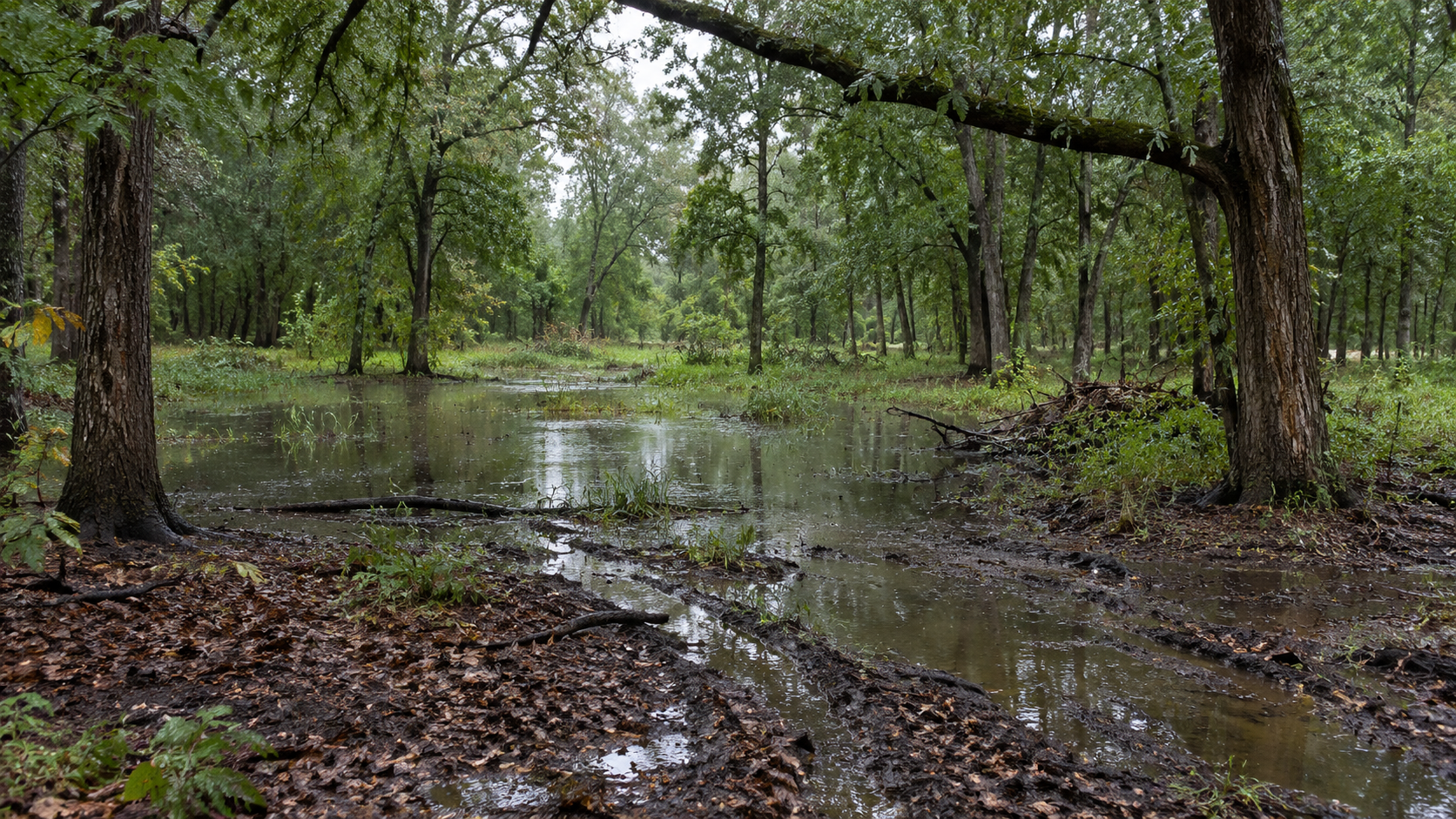
Before you buy a lot, five things decide most of what happens next: how water moves across it, what the soil will hold, how far the utilities are, what the deed and the plat allow, and which way the lot faces. A beautiful piece of land can carry six figures of hidden cost in any one of them. We would rather walk a site with you for an afternoon before the offer than redesign around a surprise afterward.
Key Takeaways
- Walk the lot after heavy rain, not on a dry day — standing water tells you more than any listing.
- Order a geotechnical report before closing if you can; foundation design is the single biggest soil-driven cost.
- Confirm where water, sewer, power, and gas actually stop, and who pays to bring them to the building pad.
- Read the deed restrictions and the plat, not just the zoning — private restrictions are usually the stricter of the two.
- Orientation is free at purchase and expensive to fix later; a lot that faces the wrong way limits every plan drawn on it.
- Build a due-diligence period into the contract and use it to bring your designer and a surveyor onto the land.
Water Comes First
Everything else is negotiable. Water is not. Start with the FEMA flood map for the parcel, then look past it — flood maps describe the river and the bayou, not the low corner of your particular acre. Ask where the water goes when it leaves the site, and whether anything upstream drains onto it.
The most useful site visit you will ever make is the one during a downpour. Ponding, soft ground, and a neighbor's driveway sheeting water toward the property line are all visible for about an hour and invisible forever after. If the lot needs fill to sit above the flood elevation, price that fill before you price the house.

What the Soil Will Hold
Soil sets the foundation, and the foundation is where quiet money disappears. Expansive clay swells and shrinks with moisture, which is why so many houses across the Gulf Coast sit on post-tensioned slabs or piers rather than a simple slab-on-grade. Sandy or rocky soil brings its own set of problems and its own numbers.
Get the report before you close
A geotechnical report costs a fraction of a percent of the project and tells the structural engineer what the ground will actually carry. If the seller will not allow borings before closing, that is information too. Steep grade is the other cost multiplier — a slope that looks like character on a listing photo can double the site work and the retaining walls.
How Far the Utilities Really Are
"Utilities available" on a listing can mean the line runs to the road, to the property line, or to a pole a quarter mile away. Confirm the actual termination point for water, sewer or septic, electric, gas, and internet — in writing, from the provider, not from the agent.
On acreage, budget for the septic system's own requirements. A percolation test determines the drain field, and the drain field's location will influence where the house, the drive, and the pool can go. That is a design constraint, not a plumbing detail.

Read the Deed, Not Just the Zoning
Zoning is public and often permissive. Private deed restrictions and HOA architectural guidelines are neither, and they are usually the binding constraint on a luxury home. They can dictate minimum square footage, roof pitch, exterior masonry percentage, garage orientation, and the color of your front door.
The documents worth pulling before the offer
- The recorded plat, which shows the building lines, easements, and drainage reserves.
- The full deed restrictions or CC&Rs, including any amendments.
- The HOA architectural control committee guidelines and its review process and timeline.
- A current survey with the tree survey, if mature trees are protected.
Easements are the ones that surprise people. A twenty-foot utility easement across the back of the lot is not usable building area, and a pipeline easement is not landscape either. Subtract every easement and setback from the gross acreage, and the number left over is the lot you are actually buying.
Which Way the Lot Faces
A lot's orientation is fixed at purchase and shapes every plan we could draw on it. West-facing glass is the hardest thing to cool in a hot climate; north light is the easiest to live with; the deep shade of a mature oak on the south side is worth real money in comfort.
We look at the same three things on every walk: where the sun lands in the afternoon, where the prevailing breeze comes from, and where the neighbors' windows are pointed. A lot that lets the main living spaces open away from the street and toward a protected view will produce a better house than a larger lot that does not. If you are weighing two parcels, start a conversation with the studio before you choose — an hour of design input at that stage is the cheapest hour in the project.

Houston-Area Specifics
Around Houston, Fulshear, and Brazoria County, three local realities dominate. The first is drainage: flat topography and heavy clay mean detention and grading requirements that vary sharply by jurisdiction and MUD district. The second is that clay soil itself, which drives foundation type before a single room is planned. The third is that much of Harris County has no zoning at all, so deed restrictions do all the work — and in the master-planned communities out west, those restrictions are detailed and strictly enforced.
Hill Country lots invert the problem: rock instead of clay, slope instead of flatness, and water availability rather than water removal as the governing question. Same discipline, different answers.

Frequently Asked Questions
Should I hire an architect before I buy the land?
A short lot-review engagement during your option period is common and inexpensive. We look at buildable area after easements, orientation, grade, and access, and tell you what the parcel will realistically support. It is far cheaper than discovering the answer after closing.
How much of my budget should the lot be?
There is no universal ratio, but treat the land and the site development as one number. A cheaper lot that needs fill, a long utility run, a septic system, and retaining walls is often the more expensive parcel by the time the pad is ready.
What is a due-diligence period and how long should it be?
It is the window in the contract during which you can investigate the property and walk away. Thirty days is common; on acreage with septic, wetlands, or unclear utilities, ask for more. Use it to order the survey, the soil report, and the percolation test.
Can a bad lot be designed around?
Usually, yes — at a price. Slope, poor soil, and awkward orientation are all solvable with engineering and clever planning. The question is whether that money buys you more house on a different parcel. Sometimes the honest answer is to keep looking, and we will say so. You can also see our portfolio for how different sites shaped very different houses.