Introduction: The Dawn of AI in Houston's Home Design

The landscape of residential architecture in Houston, a city characterized by its rapid growth and diverse housing demands, is undergoing a profound transformation. As homeowners in areas like Sugar Land, Katy, and Richmond increasingly seek personalized, efficient, and sustainable living spaces, traditional design methodologies are being augmented by cutting-edge technologies. Artificial Intelligence (AI) stands at the forefront of this revolution, reshaping how residential properties are conceived, designed, and optimized across Harris County and Fort Bend County.

AI is no longer a futuristic concept but a practical tool, empowering architects and designers to innovate at an unprecedented pace. This integration promises not only faster project delivery but also a higher degree of customization and performance, aligning perfectly with the dynamic needs of the Greater Houston metropolitan area. From initial conceptualization to final construction documentation, AI is streamlining complex processes, enhancing precision, and fostering a new era of architectural possibility.

Designing Your Dream Home Faster: How AI is Revolutionizing Residential Architecture in Houston

The Traditional Architectural Paradigm: Foundations and Evolving Limitations

Historically, residential architecture has relied on an iterative, often time-intensive process involving manual drafting, numerous revisions, and extensive client consultations. While foundational to bespoke design, this approach can be slow and costly, particularly when exploring a wide array of design options. The sheer volume of data involved in site analysis, zoning regulations, material specifications, and energy performance calculations presents significant challenges to even the most experienced design teams in Houston.

Architects in Houston, Sugar Land, and Katy have long navigated these complexities, striving to balance aesthetic appeal with structural integrity and local building codes. The demand for increasingly sophisticated homes, coupled with a competitive market, necessitates a more agile and data-driven approach. This is precisely where AI algorithms offer a distinct advantage, providing tools that enhance human creativity rather than replace it.

AI's Catalytic Impact on Residential Architecture

The integration of AI into residential architecture is multifaceted, touching every stage of the design and construction lifecycle. From generative design that explores countless possibilities to predictive analytics that optimize building performance, AI is proving to be an indispensable asset. Its ability to process vast datasets and identify patterns far beyond human capacity allows for more informed and efficient decision-making, benefiting projects across Harris County.

Generative Design: Crafting Possibilities with Algorithms

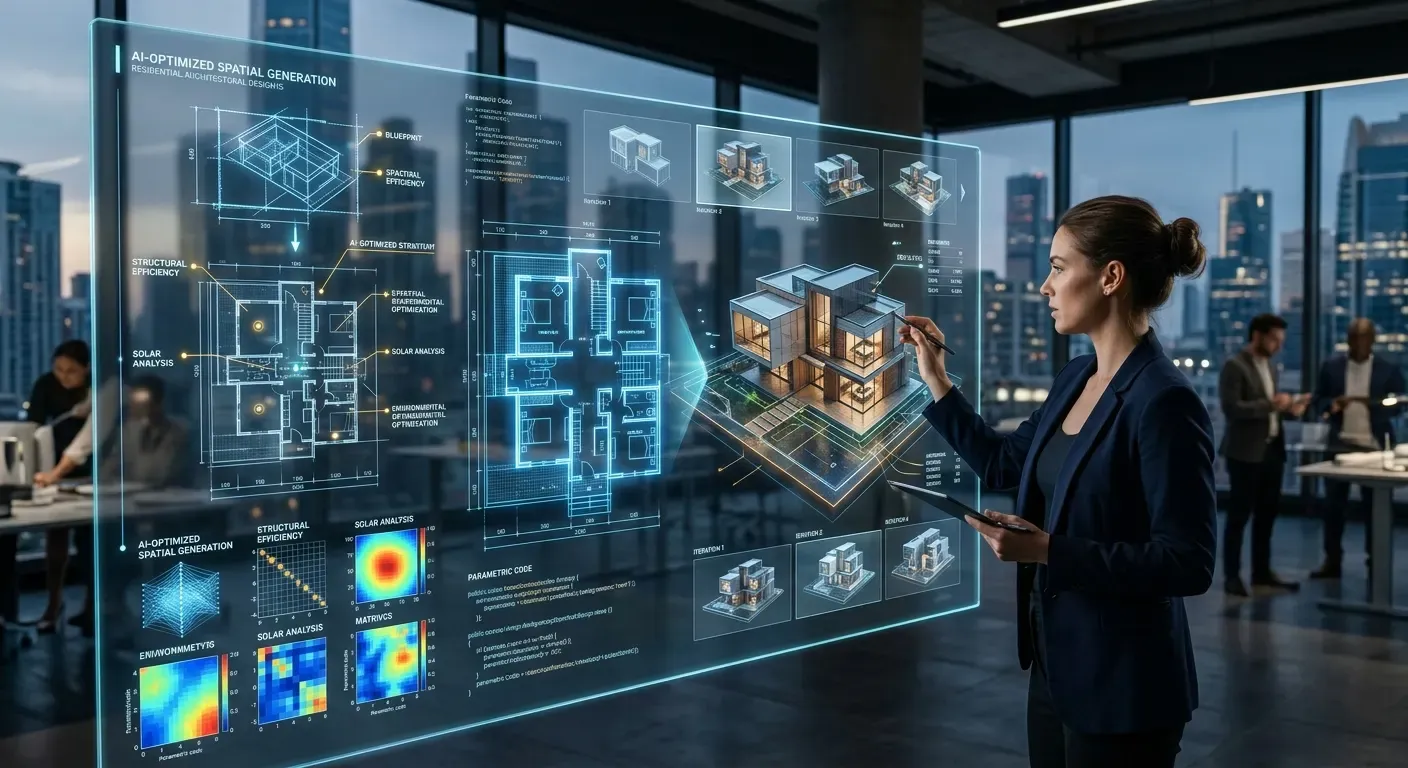
One of AI's most revolutionary applications is generative design. Instead of designers creating a single concept, AI algorithms can rapidly generate thousands of design alternatives based on a defined set of parameters, such as site constraints, desired square footage, budget, and aesthetic preferences. This allows for an unparalleled exploration of forms, layouts, and spatial relationships, offering homeowners in diverse communities like Sugar Land or Richmond truly unique options.

Architects can input specific criteria, and the AI system will evaluate and present optimized solutions that might not have been conceived through traditional methods. This process significantly shortens the conceptual design phase, allowing for more time to refine chosen designs. The outputs from generative design can encompass:

  • Optimized floor plans for specific family needs and site orientation
  • Efficient use of natural light and ventilation, critical in Houston's climate
  • Material options with detailed performance data and sustainability metrics
  • Cost-effective structural solutions tailored to local conditions and budgets
[Image: A futuristic architectural render showing a home's blueprint evolving on a large transparent screen, with various design iterations being generated by an AI interface. The screen should display complex algorithms, data visualizations, and 3D models seamlessly transitioning. This image illustrates how AI rapidly explores and optimizes countless design possibilities for residential projects, presenting a wide array of options to architects.]

Building Science Integration: Smarter, More Resilient Homes

AI's predictive capabilities are transforming building science, allowing for the design of homes that are inherently more resilient, energy-efficient, and comfortable. In a challenging climate like Houston's, characterized by high humidity, intense heat, and the threat of severe weather, AI-driven simulations can analyze factors like solar gain, thermal performance, and moisture management with extreme precision. This ensures optimal material selection and construction techniques for homes in Harris County and Fort Bend County.

From optimizing HVAC systems to designing hurricane-resistant structures, AI can model complex environmental interactions and recommend solutions that enhance a home's longevity and reduce its operational costs. This proactive approach to building science minimizes potential issues, leading to more durable and sustainable residential properties. The ability to simulate various scenarios provides invaluable insights before construction even begins.

AI's predictive capabilities are no longer just an advantage; they are becoming a necessity for designing homes that are truly resilient and energy-efficient, especially in demanding climates like Houston's.

Expedited Visualization and Client Engagement

Client engagement is paramount in residential architecture, and AI significantly enhances the visualization process. Advanced AI algorithms can rapidly generate photorealistic renders and virtual reality (VR) or augmented reality (AR) experiences from initial design sketches. This allows clients in Katy, Sugar Land, or anywhere in the region to 'walk through' their future home long before groundbreaking, fostering a deeper understanding and more meaningful feedback.

The speed and accuracy of AI-powered visualization tools drastically reduce the time spent on revisions and ensure that the final product aligns perfectly with the client's vision. This interactive and immersive experience minimizes miscommunications and accelerates decision-making, leading to greater client satisfaction and more efficient project progression across the Houston metropolitan area.

Accelerating Project Timelines and Enhancing Precision

Beyond design, AI contributes to substantial time and cost savings throughout the entire project lifecycle. By automating repetitive tasks such as drafting, generating bill of materials, and performing code compliance checks, architects can dedicate more time to creative problem-solving and client interaction. This efficiency translates directly into faster project completion and reduced labor costs for homeowners in Fort Bend County and beyond.

Furthermore, AI's ability to analyze vast amounts of data helps identify potential conflicts or errors early in the design phase, preventing costly rework during construction. This precision engineering, driven by AI, ensures that projects in Richmond or other growing communities are executed with greater accuracy and fewer unforeseen complications, making the dream home journey smoother and more predictable.

The Synergy of Human Expertise and Artificial Intelligence

It is crucial to understand that AI serves as a powerful augmentation to human creativity and expertise, not a replacement. Architects remain central to the design process, providing the vision, aesthetic sensibility, and ethical judgment that AI cannot replicate. AI handles the computational heavy lifting, freeing up architects to focus on the qualitative aspects of design, client relationships, and artistic innovation.

The most successful architectural firms in Houston are those that embrace this human-AI synergy, leveraging technology to amplify their capabilities. This collaborative model ensures that residential designs are not only technically optimized but also imbued with the unique character and human touch that defines a true dream home. The future of architecture lies in this intelligent partnership.

[Image: A professional architect collaborating with AI. The architect is at a modern desk, actively sketching or refining designs on a large digital tablet, while holographic projections or multiple screens around them display AI-generated data, energy simulations, and detailed material analyses for a residential building project. This image clearly illustrates the partnership between human creativity and AI's powerful analytical capabilities in modern home design.]

Future Horizons for Residential Architecture in Greater Houston

Looking ahead, the integration of AI in residential architecture will only deepen. We can anticipate further advancements in AI-driven smart home systems, predictive maintenance, and highly personalized living environments that adapt to occupant preferences. Houston, with its forward-thinking architectural community and robust growth, is poised to be a leader in this evolution, setting new standards for home design.

As AI continues to learn and evolve, its capacity to contribute to sustainable building practices, disaster resilience, and community-centric design will expand. Homeowners across Harris County and Fort Bend County can look forward to homes that are not just aesthetically pleasing but also profoundly intelligent, efficient, and responsive to their needs and the environment.

Conclusion: Designing Tomorrow's Homes, Today

The revolution brought by Artificial Intelligence to residential architecture is undeniable. For homeowners in Houston, Sugar Land, Katy, and Richmond, AI means a faster, more precise, and highly personalized path to their dream home. For architects, it represents an unprecedented toolkit to push the boundaries of design, optimize building science, and deliver projects with unmatched efficiency.

As AI continues to mature, its role in creating smarter, more sustainable, and resilient homes for the Greater Houston area will only grow, solidifying its position as a cornerstone of modern architectural innovation. The future of residential design is here, and it is intelligently crafted.

EXCERPT

AI is transforming residential architecture in the greater Houston area, from Sugar Land to Katy. Discover how artificial intelligence streamlines design, optimizes building science, and accelerates the creation of dream homes, offering unprecedented efficiency for homeowners and architects alike.

SEO TITLE

AI in Houston Residential Architecture: Design Your Dream Home Faster

SEO DESCRIPTION

Discover how AI revolutionizes residential architecture in Houston, Sugar Land, Katy, and Richmond. Streamline design, optimize building science, and accelerate dream home creation with artificial intelligence.

TAGS

AI in Architecture, Residential Design, Houston Architecture, Building Science, Generative Design, Smart Home Design, Fort Bend County, Harris County, Katy Homes, Sugar Land Homes, Richmond Architecture, Architectural Technology, Home Design Innovation, Construction Tech, Sustainable Architecture