A good range hood is sized to how you cook, vented straight outside through a short duct, and paired with a planned source of makeup air. The hood you see is the smallest part of that system. The duct path and the replacement air decide whether it works, and both have to be settled before the cabinets and ceiling are drawn.
Key Takeaways
- Size the fan to your cooking style and your range, not to the look of the hood.
- A short, straight, smooth duct to the outside beats a bigger fan on a long, bent duct.
- Every cubic foot of air a hood pushes out has to come back in. Plan that air on purpose.
- Powerful hoods in tight houses can pull exhaust backward through a fireplace or water heater flue.
- Decide the hood, the duct route, and the makeup air in the same meeting as the kitchen layout.
Start With How You Cook
Hood power is measured in CFM, cubic feet of air moved per minute. A household that mostly simmers, bakes, and boils does not need the same fan as one that sears, wok-cooks, or fries often. A high-output gas range, a griddle, or a built-in grill on the range wall all push the number up.
More is not always better. Past a certain point, a bigger fan is louder, pulls more conditioned air out of the house, and creates a bigger makeup air problem. We ask clients how often they cook at high heat and how often they entertain, then size the hood to that. A hood that is quiet at the speed you actually use is worth more than a large number on the box.
Width, depth, and height over the range
The hood should be at least as wide as the cooktop, and a few inches wider on each side catches more of the plume. Depth matters as much as width, because steam rises and drifts forward. The bottom edge usually sits somewhere around 30 to 36 inches above the cooking surface, but the manufacturer's installation sheet sets the real range, and it varies by model.

The Duct Is the Real Design Decision
Every elbow, every extra foot of duct, and every flex section costs airflow. A hood rated for a given CFM delivers that number only on a short, straight, smooth-walled run to the outside. Put the same hood on a long run with several bends and it can lose a large share of its performance and get louder doing it.
That is why the range location is tied to the structure. An island range with a ceiling-hung hood needs a duct path through the floor above or the attic. A range on an exterior wall can often vent straight out the back. If a second floor sits over the kitchen, a joist bay has to be kept clear for the duct, and a bedroom above should not lose a closet to a duct chase you found too late.
Recirculating hoods are a last resort
Recirculating hoods filter the air and send it back into the room. They remove some grease and odor but not heat, steam, or combustion gases. In a custom home, plan the exterior duct from the beginning and keep recirculating as the fallback for a true constraint.
Makeup Air: Where the Replacement Air Comes From
An exhaust fan cannot remove air from a sealed house. The same volume has to enter somewhere. In an older, leaky house that happened through cracks. Modern custom homes are built tight, so the air has to be provided deliberately or the house will find its own path.
The risk is backdrafting. If the hood pulls air down a fireplace chimney or a gas water heater flue, combustion gases can come into the house instead of going out. Many model mechanical codes call for a makeup air system once a hood passes roughly 400 CFM, but the local jurisdiction and the specific appliance set the actual rule, so we confirm it with the permitting authority and the mechanical designer on every project.
A makeup air system is typically a duct from outside to the return side of the HVAC system or into the kitchen area, with a motorized damper that opens only when the hood runs, and often a tempering element so the incoming air is not raw outdoor air. It needs space, a wall or roof penetration, and a place for the damper, which is one more reason to plan it early.

Make the Hood Look Like It Belongs
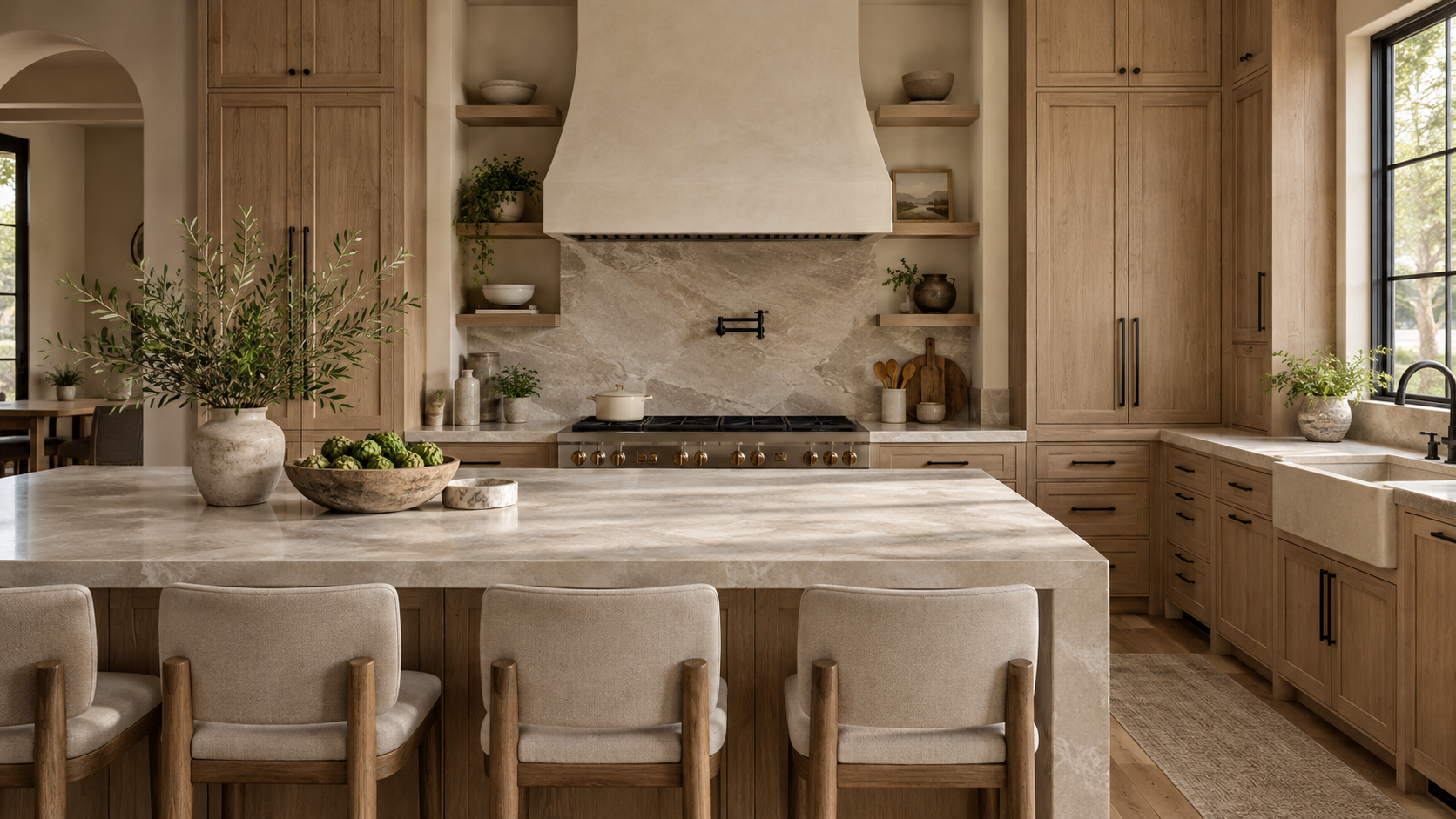
The hood is often the largest object on the kitchen's main wall, so it deserves a real design. Ornate, oversized hoods are losing ground to quieter forms: plaster or limewashed surrounds, plain wood, a simple steel shape, or a hood hidden inside the cabinetry with only a slim slot visible. All of them work as long as the inside is a proper, serviceable fan with grease filters you can reach and wash.
Plan the surround material for heat and grease. Wood needs a protected liner. Plaster needs a finish you can wipe. Whatever you choose, leave access for the filters and for the blower, because a hood you cannot clean eventually stops working well.

What This Means in a Houston Home
In Houston's humid climate, makeup air is not a detail. Untreated outdoor air carries a lot of moisture, so a big hood that pulls it in can load the air conditioning and leave the kitchen damp. We coordinate the hood, the makeup air, and the HVAC load early, and we prefer a smaller, quieter hood with good ducting over an oversized one. If you are planning a kitchen, start a conversation with the studio and we will work the hood into the first layout.
Frequently Asked Questions
How many CFM does a range hood need?
It depends on the range and how you cook. Gas ranges and high-heat cooking need more than electric or induction. Start from your cooking habits, then check the duct length so the fan can actually deliver its rating.
Do I need makeup air for my range hood?
Often yes for powerful hoods, and many model codes set a threshold around 400 CFM. The rule depends on your local jurisdiction, so we confirm it during design.
Can I put a range hood on an island?
Yes, but the duct has to travel up through the ceiling and out through the attic or roof. Plan the route and the structure early, and expect the hood to be more visible from every side.
Is a downdraft vent a good substitute?
Downdrafts capture less than an overhead hood because they fight the way hot air rises. They are a compromise for places where a hood truly cannot go.