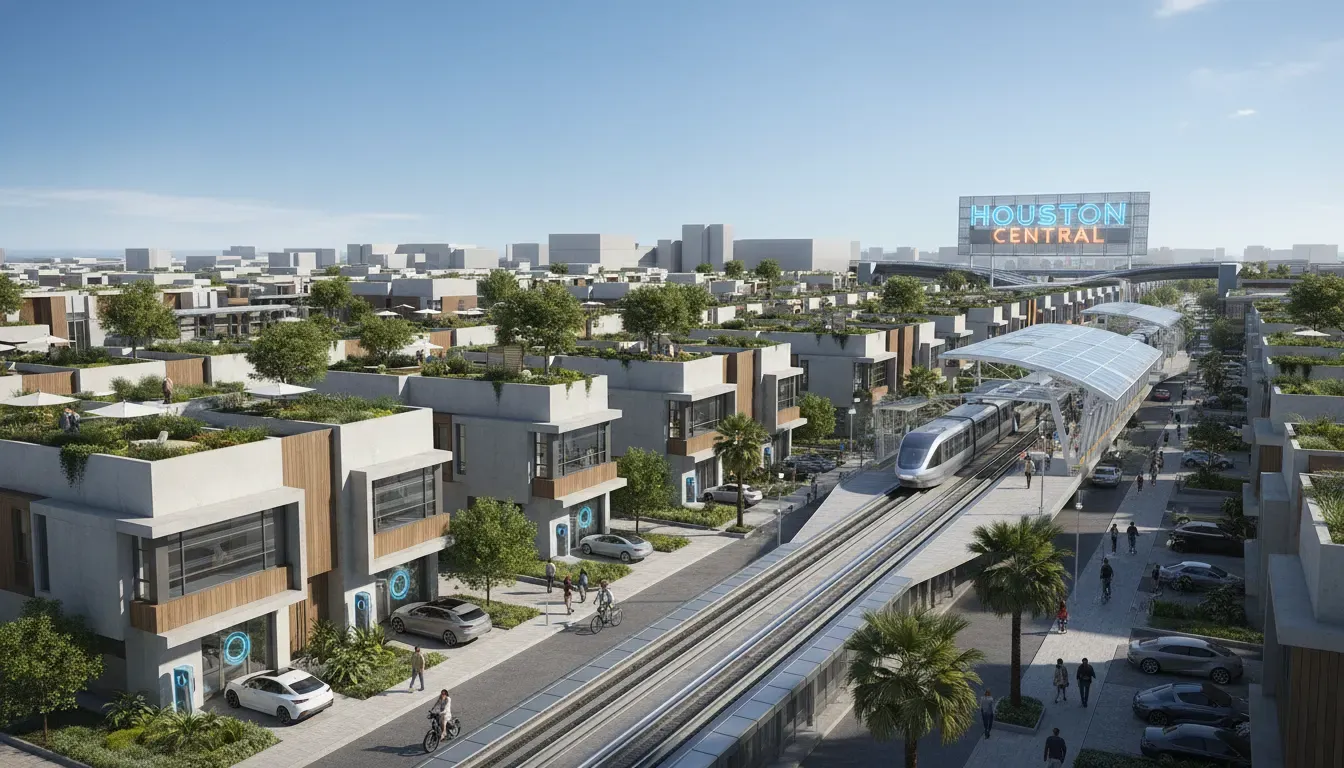
The housing landscape across the Houston metropolitan area is entering a period of significant structural and regulatory transformation. For homeowners in Harris County and Fort Bend County, the next several decades will be defined by a shift toward high-performance building envelopes and sophisticated engineering. As the region grapples with both rapid population growth and environmental challenges, the local construction industry is pivoting toward resilient architecture and streamlined permitting processes to ensure the long-term viability of residential assets.

Architectural Resilience and Sustainable Engineering
Future residential developments in Houston are moving away from traditional stick-frame methods in favor of materials that offer superior durability. Architects are increasingly specifying insulated concrete forms (ICF) and advanced moisture-mitigation systems to combat the humid subtropical climate. In Fort Bend County, new construction standards are emphasizing flood-resilient designs that go beyond minimum code requirements, incorporating permeable paving and sophisticated onsite stormwater management systems to protect property values.

The Evolution of Permitting and Regulatory Compliance
The permitting landscape in Harris County is undergoing a digital revolution aimed at increasing transparency and reducing lead times. Future homeowners can expect a transition toward automated code review systems and blockchain-based property records. These technical advancements will require a higher degree of precision in architectural documentation, making it essential for owners to work with firms that utilize Building Information Modeling (BIM) to navigate increasingly stringent municipal requirements.

Densification and Urban Planning Trends
As land availability tightens, the market is shifting toward densification and transit-oriented development. This trend is visible not only in the urban core of Houston but also in the expanding suburbs of Fort Bend County. Homeowners will likely see an increase in accessory dwelling units (ADUs) and multi-generational housing configurations, which are becoming vital for managing urban sprawl and infrastructure costs.
Key considerations for future Houston homeowners include:
- Integration of smart home technologies and IoT-enabled infrastructure for energy management.
- Adherence to updated windstorm and elevation requirements dictated by changing insurance landscapes.
- The rise of modular and 3D-printed residential structures to decrease construction timelines and waste.
- Greater emphasis on community-wide drainage improvements and green-space preservation within residential plats.